
Nikro Air Duct Cleaning in San Juan Capistrano: A Homeowner’s Guide
Owning a Nikro unit and running it correctly are two different things. The machine needs specific CFM calculations matched to duct diameter and linear footage, and plenty of operators skip that step entirely, then let the vacuum run while they scrub. Understanding what a Nikro system actually does mechanically is the fastest way to tell a real remediation job from a brand name on a van. If reading this leaves you wanting a second set of eyes on your ducts, call (844) 443-3974 for a free estimate.
What Do Nikro’s Negative-Air Machines Actually Do?
A Nikro negative-air machine does not simply suck dust out of a duct. It converts the entire duct run into a sealed, low-pressure collection zone, so debris released during agitation travels toward the machine instead of into your living room, bedroom, or kitchen. That difference – contained removal versus airborne redistribution – is the whole point of the equipment.
Here’s how the mechanical sequence works when it’s done properly:
- The technician creates a sealed path by connecting the collection unit to a trunk line and closing off or covering return registers.
- The HEPA-filtered collection unit pulls the duct system into negative pressure relative to the rooms around it. Air wants to flow in, not out.
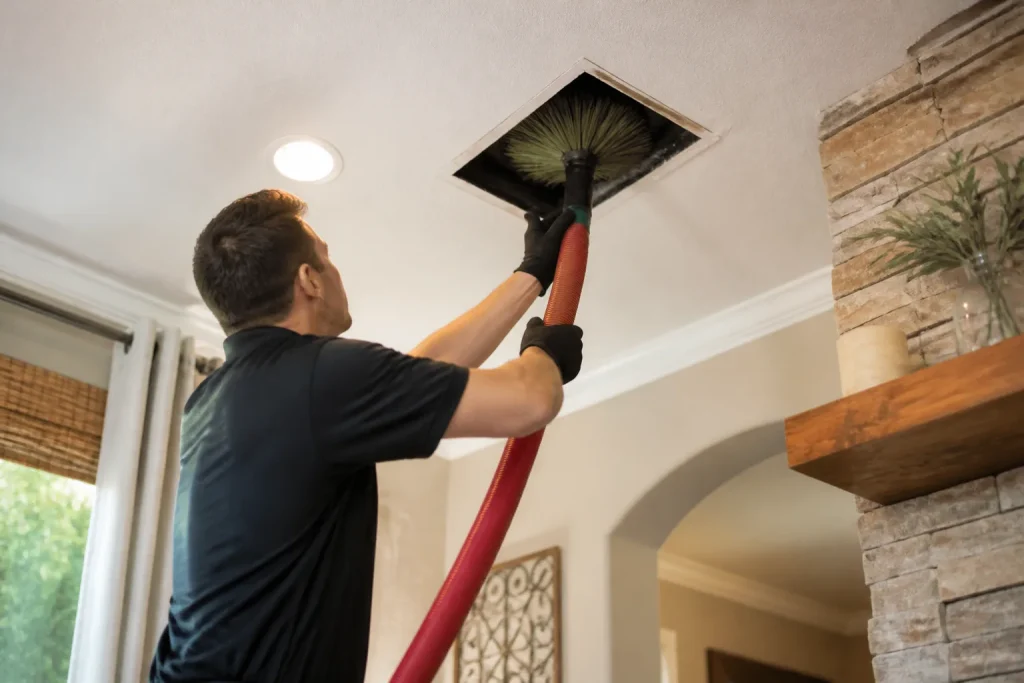
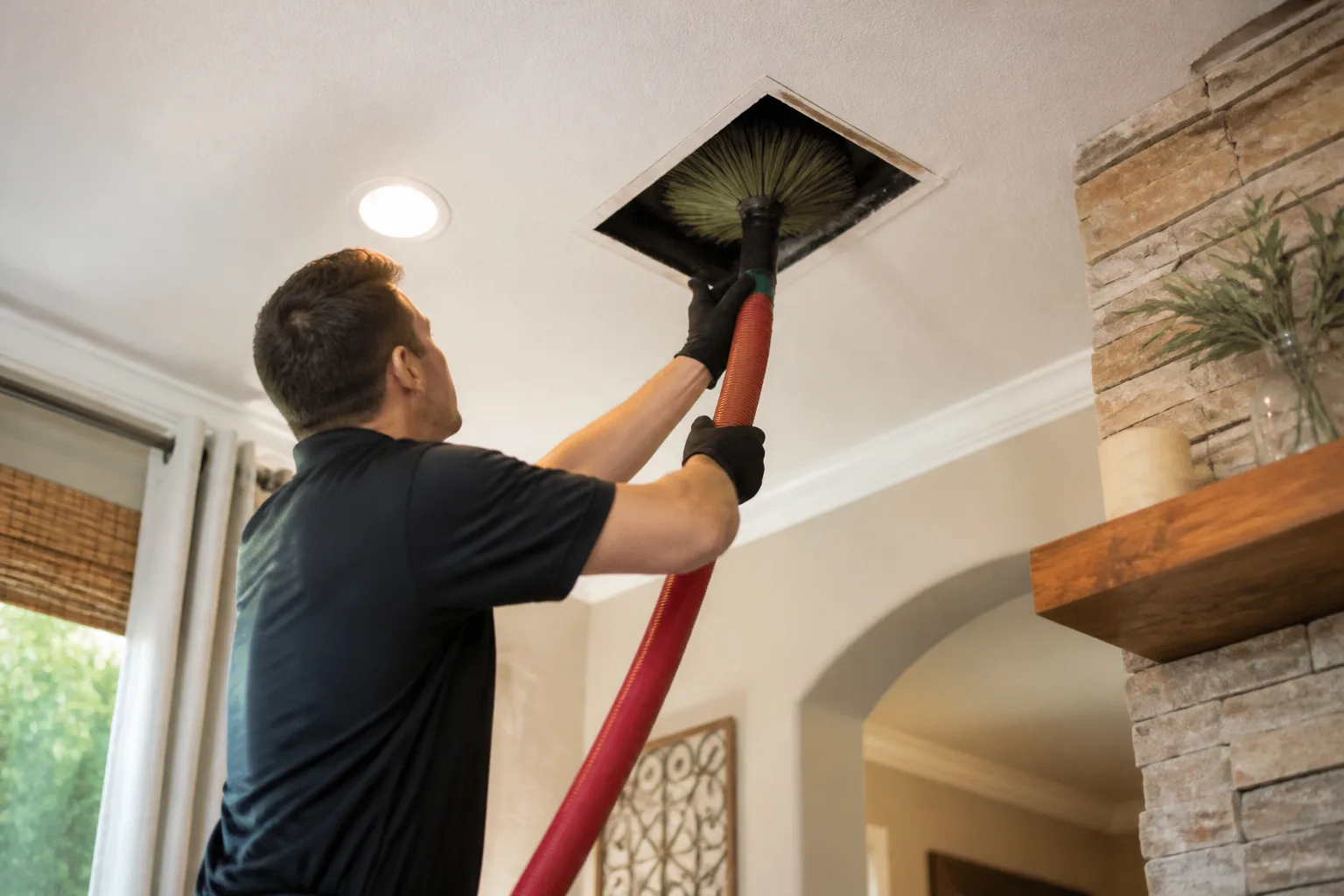
- Rotary agitation – typically a Rotobrush tool – breaks loose the settled dust, pet hair, and construction debris clinging to duct walls.
- Loose material gets drawn into the HEPA collection instead of drifting into the house.
- The technician verifies the pull before opening the system back up.
Every one of those steps depends on the machine being sized correctly. Negative pressure that’s too weak does nothing. Negative pressure that’s too strong can collapse flex duct or pull a seal apart. In San Juan Capistrano homes, where duct runs vary widely by build, that calculation is not a formality.
Portable Duct Cleaning Rigs Versus Full Remediation Rigs
Nikro builds both compact duct cleaning systems and larger remediation units, and they’re not interchangeable. A portable rig is appropriate for standard residential maintenance cleaning on ductwork that runs through an attic, a crawlspace, or wall chases. It’s the right tool for a house with typical flexible or rigid metal ducting and no contamination beyond normal buildup.
A larger remediation rig is the correct call when the duct system has been wet, when there’s visible microbial growth, or when the work needs to run inside a contained zone with additional filtration. Abatement Technologies negative-air equipment often joins that kind of setup, because remediation work means controlling the whole room, not just the duct interior.
What a homeowner should take from this: when a contractor says “we use Nikro,” ask which system. If the answer is a portable unit and the job is a standard residential cleaning in San Juan Capistrano, that’s fine. If the answer is a portable unit and there’s been water in the ducts, that’s the wrong machine for the problem.
Why Slab Foundations and In-Slab Ductwork Are Their Own Challenge
Plenty of San Juan Capistrano homes sit on slab foundations, and some of those have ductwork buried in or under that slab. This is where flexible-access tooling earns its place. An in-slab duct run gives you almost no room to work, limited access points, and often a longer horizontal travel between registers than an attic system would have.
Nikro’s flexible-access tools are built for exactly that geometry – they can reach down a long, low-profile run and still deliver enough agitation to move material on the duct walls. The catch is that the technician has to adjust the setup to the run length. A brush head sized for an attic trunk won’t work well in a tight slab run, and the negative pressure needs to be matched to the longer travel distance or debris simply won’t make it back to the collection unit.
We also see slab homes in San Juan Capistrano where past water intrusion has left residue inside the duct chase. That changes the job from cleaning to remediation, and it’s the moment to be honest with yourself about which one you’re booking. If you’re not sure what’s down there, that’s a conversation worth having before the technician arrives, not after.
What a Technician Should Be Doing at Each Stage
This is where homeowners can actually hold a contractor accountable, because the sequence is visible if you know what to watch for.
- Before agitation: the collection unit is connected and sealed, and negative pressure is established. If the technician starts brushing before the vacuum is pulling, debris is going into the house.
- During agitation: the rotary tool works each run systematically, with the technician moving register to register in a set pattern rather than spot-checking the accessible ones.
- On the collection side: the HEPA filter is seated correctly and there’s no visible dust escaping at the unit.
- At the end: the technician verifies the work – typically by inspecting the duct interior at the access points and confirming visible debris is gone – then reassembles and reseals everything.
- After the job: you get before-and-after photos of your own ducts. Ask for them; a professional expects the question.
The verification step is the one most often skipped. A thorough cleaning that nobody checks is a promise, not a result. When we do a job in San Juan Capistrano, the photos exist so you don’t have to take the work on faith.
What Questions Should You Ask Before Booking?
Three questions separate a genuine equipment-based proposal from a sales pitch. Ask them before you schedule, and listen for a specific answer rather than a confident one.
- “What CFM is the unit rated for, and how are you matching it to my duct system?” A real technician can talk about airflow relative to duct diameter and run length. A vague answer usually means the calculation never happens.
- “Is the HEPA filtration certified, and what’s the filter’s rating?” HEPA is a performance standard, not a marketing word. If someone can’t tell you what’s filtering the exhaust air, you’re getting a shop vac with better branding.
- “Does the job include a post-cleaning particulate check?” This confirms the work was done rather than leaving you to guess.
Add a fourth if you like: ask for a flat price for the whole system, agreed before work begins. Per-vent pricing invites the bait-and-switch that gives this trade its reputation – a low headline number that grows once the technician is standing in your hallway. One price per system, in writing, is the honest structure.
For a broader look at what a proper cleaning involves here, our air duct cleaning page covers the process end to end. And if the ductwork itself is losing air, the fix is more than cleaning: we clean, repair, and seal, because a cleaned duct with an open joint just gets dirty again. Our San Juan Capistrano Air Duct Cleaning Pros page explains how the two pieces fit together.
When to Call a Pro
Some signs mean you should stop researching and book the job. Persistent dust settling on surfaces within a day of cleaning, a musty smell when the system kicks on, visible debris at the registers, or a household member with allergies or asthma that seems worse indoors than out – those point to a duct system that needs professional attention rather than another filter change.
Ignore the online advice about sticking a vacuum hose into a register. Consumer vacuums don’t generate meaningful negative pressure, and the agitation you can reach from a register won’t touch the settled material deeper in the run. Commercial-grade equipment, residential pricing – that’s the split that matters here.
Related services in San Juan Capistrano: if your dryer takes two cycles to get a load dry, that’s a different duct system with its own fire-safety stakes. Our dryer vent cleaning page covers that work, and fire safety starts at the dryer vent, not the furnace.
What Does Nikro Air Duct Cleaning Cost in San Juan Capistrano?
Most residential duct cleanings in San Juan Capistrano fall in a few hundred dollars to just under a thousand for a whole-system job, and specialized remediation work runs higher because it involves more equipment and more time. We quote per system by written estimate, not per vent, so the number you agree to is the number on the invoice.
Our technicians have up to 15 years of experience, and they work with the brands professionals trust: Rotobrush and Nikro for duct work, Honeywell and Aprilaire for filtration upgrades afterward, and Abatement Technologies when the job calls for remediation-level containment. The written estimate sets the final price, and the estimate itself is free.
The Bottom Line
Nikro is a capable line of equipment, and that’s exactly why it’s worth asking which unit a contractor is bringing and how they plan to use it. Negative pressure matched to your duct system, HEPA-filtered collection, systematic agitation, and a verification step at the end – those four things define a real job, regardless of the badge on the machine.
If you’re in San Juan Capistrano and need help, San Juan Capistrano Air Duct Cleaning Pros offers free estimates – call (844) 443-3974. We answer 24/7. Fast dispatch from 7am to 7pm, Sunday through Friday, and we’re closed Saturday.
Frequently Asked Questions
Yes, for duct work specifically. Nikro systems are built for HVAC remediation, with HEPA filtration and enough airflow to hold a duct system under negative pressure while walls are agitated. A standard shop vac moves air but doesn’t create contained negative pressure, so loosened debris can end up in the rooms. Call (844) 443-3974 for an exact quote – estimates are free.
Usually because the quote covers less: fewer runs, no HEPA verification, or a portable unit pushed into a job that needed a remediation rig. Sometimes it’s per-vent pricing that grows once the technician is on site. Ask for one flat price per system in writing before work starts. Call (844) 443-3974 for an exact quote – estimates are free.
Ask for before-and-after photos of your own ducts and a post-cleaning particulate check. A technician who follows the full sequence expects both questions and has answers ready. If you get excuses instead of images, that tells you something too. Call (844) 443-3974 for an exact quote – estimates are free.
Often, yes. In-slab runs are longer and harder to reach, so flexible-access tooling and correctly calculated negative pressure make the difference between a real cleaning and a token pass. Ask which tools the technician will bring for your specific duct layout. Call (844) 443-3974 for an exact quote – estimates are free.
One more thing worth saying plainly: nobody enjoys thinking about their ductwork, which is exactly why so many homeowners put it off until a smell or a dust problem forces the issue. A little skepticism in the booking conversation does more good than a nice brochure. For HVAC cleaning alongside the duct work, the same questions apply.
Written by the team at San Juan Capistrano Air Duct Cleaning Pros.
Need Air Duct Cleaning Help?
Call San Juan Capistrano Air Duct Cleaning Pros - the local pro we connect you with is licensed and insured, with free written estimates in San Juan Capistrano.
(844) 443-3974