
Last updated November 24, 2026
 Whole-home duct cleaning
 Dryer vent cleaning
 Camera inspection
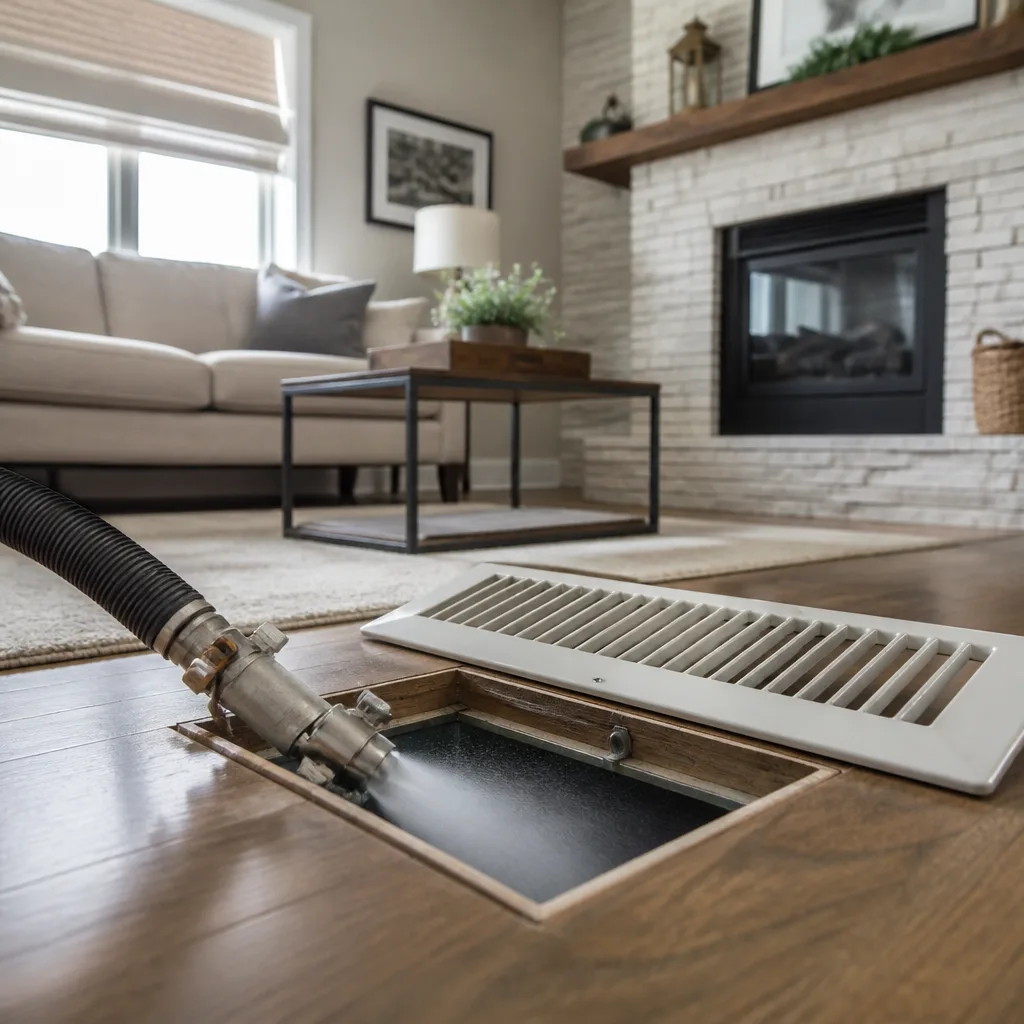 Sanitizing & deodorizing
Whole-system duct and dryer vent check with before-and-after photos - you see exactly what came out of your vents
That "$99 whole-house special" is a bait ad - the real number appears once they are in your hallway, or the "clean" is a shop-vac at the register. We photograph the inside of your ducts before and after instead.
DIY vs Professional Air Duct Cleaning: The San Juan Capistrano Homeowner’s Decision Guide
The DIY question for duct cleaning gets framed as a question of effort or budget. It isn’t. It’s a question of pressure. A consumer-grade shop vac moves roughly 60-80 CFM of air. A professional negative air machine moves 2,000-4,000 CFM. That gap isn’t a matter of degree, like the difference between a good vacuum and a great one. It’s the difference between stirring contamination loose and pulling it out of the system entirely, and no attachment kit sold online bridges it. Most homeowners in San Juan Capistrano who attempt duct cleaning themselves are redistributing dust through the house, not removing it. In this guide we’ll walk through the physics of source removal, what consumer kits actually accomplish, the narrow tasks you can genuinely do yourself, and how to judge a professional job on outcome rather than invoice.
Quick Answer
The difference between DIY and professional air duct cleaning isn’t effort, it’s negative pressure. Consumer equipment cannot generate the airflow required to achieve source removal, so a DIY attempt typically loosens contamination and redistributes it through supply registers rather than extracting it from the system. Professional service uses sealed negative-pressure containment and commercial rotary equipment to physically remove debris. A homeowner can handle gross debris at registers and grilles, filter replacement, and dryer vent lint clearing, but the ductwork interior is a different job with a different machine behind it.
Styles & brands we work with
- Whole-home duct cleaning
- Dryer vent cleaning
- Camera inspection
- Sanitizing & deodorizing
Table of Contents
- The Physics of Source Removal: Why Pressure Is the Whole Job
- What Homeowners Can Legitimately Do Themselves
- When a DIY Attempt Makes Professional Cleaning Harder and More Expensive
- An Honest Look at Consumer Duct Cleaning Kits
- Cost Comparison: Outcome, Not Just Invoice
- What Professional Duct Cleaning Equipment Actually Does
- Air Quality, Sanitizing, and What Clean Means Beyond Debris
- How to Decide for Your Own Home
The Physics of Source Removal: Why Pressure Is the Whole Job
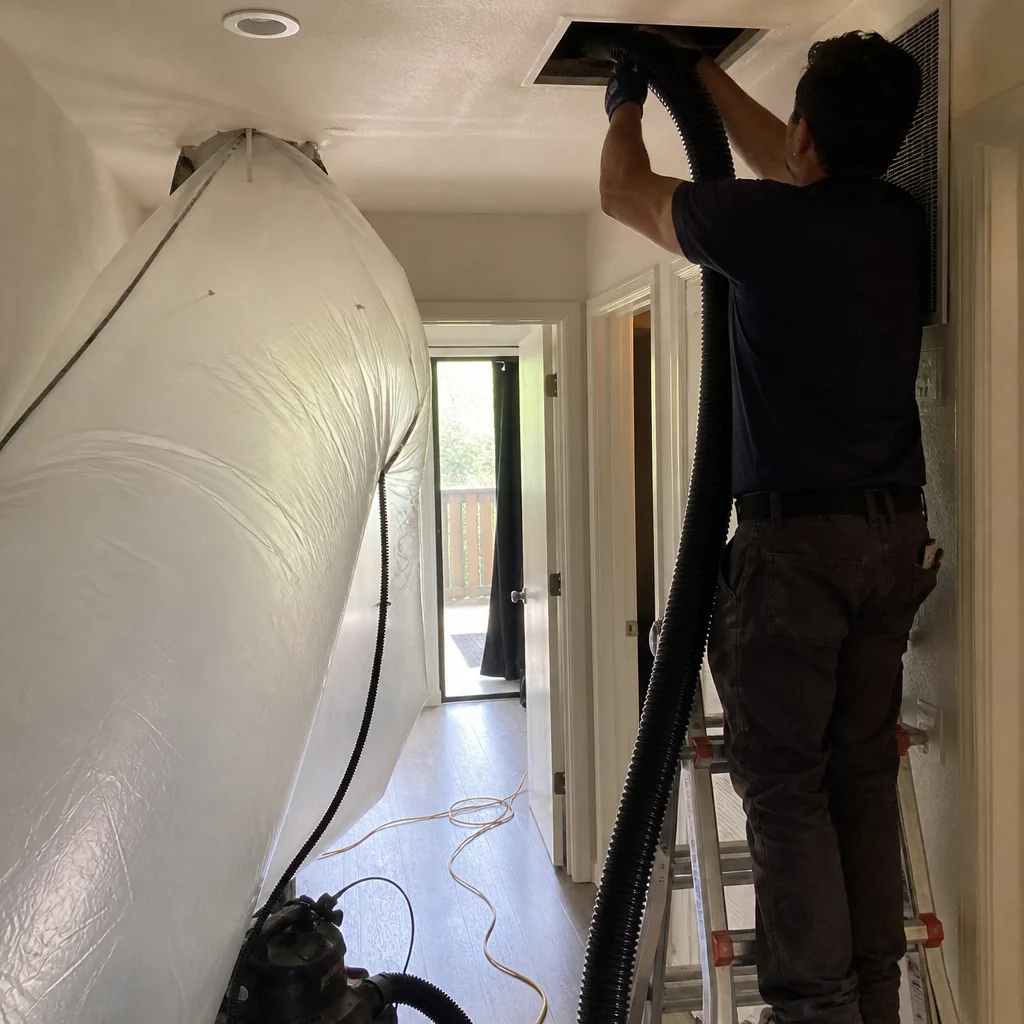
To understand why DIY duct cleaning so often underdelivers, imagine trying to shovel out a mudroom using only lung power. The strength of a vacuum is measured by how much air it moves and how fast, and both numbers matter. A shop vac with a 1.5-inch hose produces high velocity at the nozzle but almost no sustained airflow through a 6-inch duct. Push that hose down a supply run and the surrounding air has nowhere to go, so the vacuum simply recirculates the same dust-laden air through the system. Fine particulate, the smallest and most respirable fraction, goes airborne instead of into the tank. The technical standard for this work, published by NADCA (the industry association for HVAC cleaning professionals), calls for sealed negative-pressure containment, which means the whole system’s ductwork is put under suction from a single machine while the technician agitates each run in sequence. Debris leaves the system at one point; nothing enters the inhabited space.
In our experience the visible result is what tells the story. A professional job ends with the extraction machine’s filter loaded and the supply runs actually clear, verifiable with before-and-after photos. A DIY pass typically ends with the register face looking cleaner while the interior walls of the trunk line look the same as before. If you’re curious about how we picture this for clients, see our air duct cleaning page, which shows how a full-system removal differs from a surface pass.
What “negative pressure” actually means in a residential setting
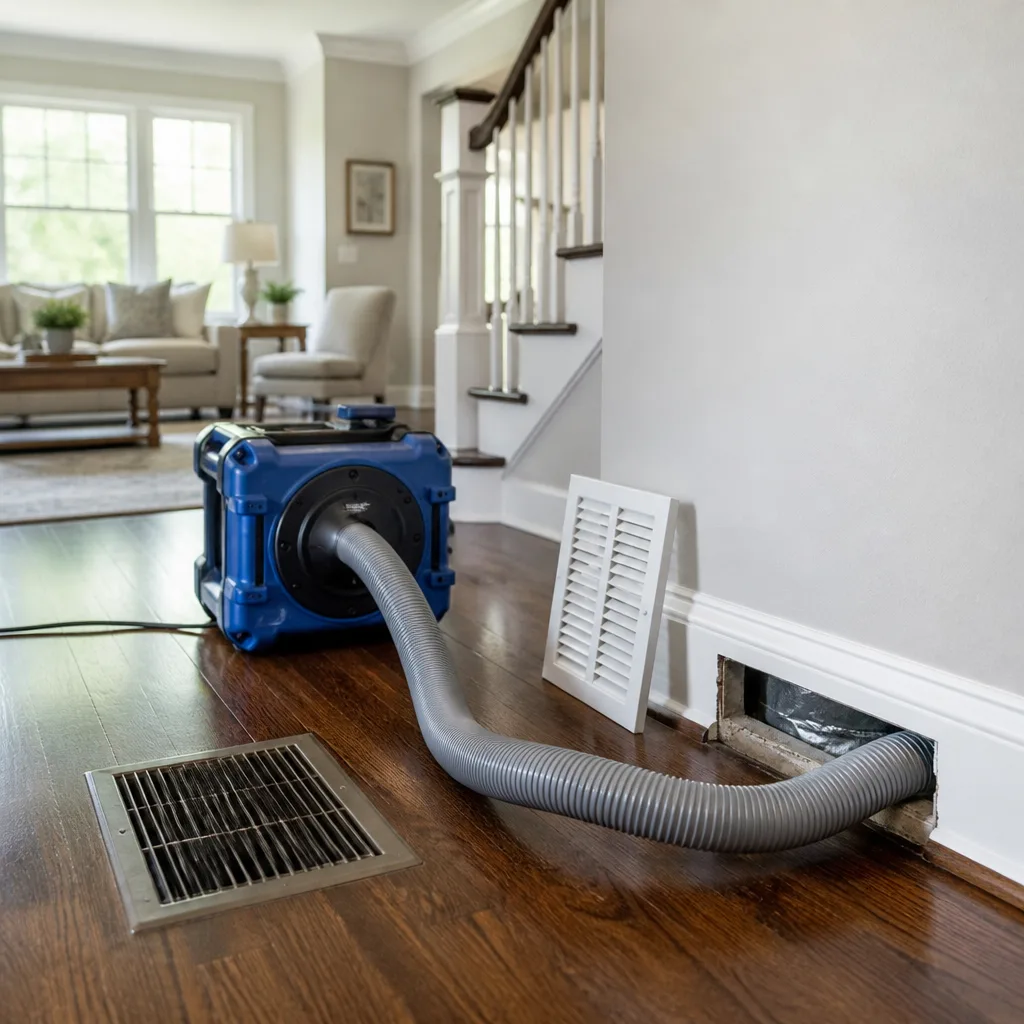
Negative pressure simply means the air pressure inside the ductwork is lower than the room it serves, so air flows into the ducts instead of out of them. To create that condition in a home, the technician connects a high-volume negative air machine to a central access point (often a trunk main or plenum), seals every register and return so the only way in is through the machine’s filter, and then runs a rotary brush or air whip down each branch to knock loosened material into the airstream. Abatement Technologies negative-air equipment is built for exactly this containment pattern, which is why it shows up in restoration work where contamination has to stay put.
What Homeowners Can Legitimately Do Themselves
There are honest, useful tasks a San Juan Capistrano homeowner can do without a professional machine, and they help. They’re just not the same job as duct cleaning, and knowing the line matters.
Tasks that genuinely help
- Register and grille cleaning. The slatted faceplate and frame collect dust visibly. Removal and a gentle wash make a measurable difference in what blows into a room, and it’s easy to do without tools.
- Return-air grille vacuuming. A shop vac with a brush attachment at the return can pick up loose lint and larger debris before it gets pulled deeper into the system.
- Filter replacement or upgrade. Matching the filter’s MERV rating to what your blower actually handles matters more than the brand on the cardboard. A Honeywell or Aprilaire filter cabinet is a common upgrade because a pleated media filter sits in a purpose-built housing rather than straining the motor on the return side.
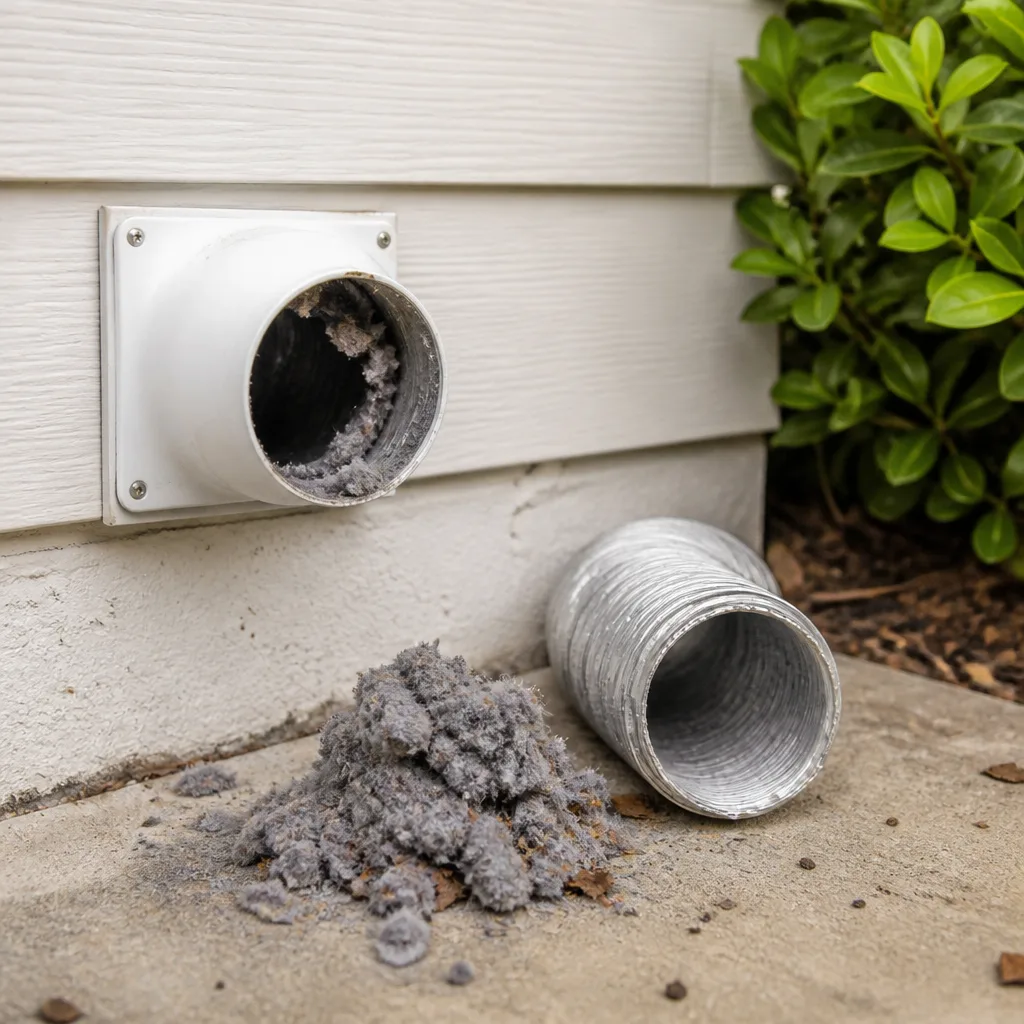
- Dryer vent lint clearing. The section of dryer vent you can reach from the dryer connection and the exterior hood can be cleared of accumulated lint. That reachable section is where most visible fire risk collects. Fire safety starts at the dryer vent, and annual attention to it is a genuine safety measure. Full-length mechanical cleaning of the vent run, which requires a rotating brush or air whip, is a separate job (see our dryer vent cleaning page).
- Visual documentation. Photograph the register interiors, the return plenum if you can reach it, and the visible ductwork before any cleaning. Those photos are the baseline a professional uses to show what actually changed.
What to leave alone
Everything downstream of the register faceplate. Flexible insulated duct, rigid fiberglass board, and sheet-metal trunk lines all behave differently under a brush, and none respond well to a homeowner-sized vacuum or a hand-fed bristle head. More on what goes wrong in the next section.
When a DIY Attempt Makes Professional Cleaning Harder and More Expensive
The costliest outcome of a DIY duct cleaning attempt isn’t the hours spent. It’s the damage that shows up afterward, because repairing compromised ductwork costs meaningfully more than cleaning it would have. Three failures come up again and again.
Pushed-in flex duct
Flexible duct with its internal wire helix and plastic inner liner is the most common duct type in Southern California attic runs. It is not rigid. A homeowner pushing a shop vac hose or a hand brush into a length of flex duct can compress the liner inward, creating a pinch point that cuts airflow to a room and defeats the insulation. If the inner liner tears, the wire helix becomes exposed and the duct collects lint at the point of failure. Repair means cutting out the damaged section and reconnecting with proper mastic and a mechanical clamp at minimum, and in some cases replacing the whole run.
Dislodged insulation
Duct board and wrapped sheet-metal runs carry a layer of fiberglass insulation on the outside. A shop vac under pressure can loosen the facing or pull insulation inward through a joint, and once interior insulation fibers are exposed to airflow they become part of what you breathe. Cleaning an interior-insulation duct after a DIY attempt means a more delicate process, with lower-pressure agitation and additional containment.
Damaged register collars and boots
The boot is the shaped sheet-metal fitting behind the visible register, and the collar is the lip that holds the duct to it. A vacuum head forced over a collar and pulled can deform the metal, tearing the seal where flex duct is taped and clamped. A leaky boot seal is a direct efficiency loss and a contamination entry point. In a home with attic-accessible ducts, repairing one boot properly is a small job for a professional, but it isn’t free. If two or three collars are damaged in one attempt, the repair bill alone can approach the price of a straightforward professional cleaning.
These are the failures we see most often on post-DIY service calls. It’s also why we now ask, up front, what’s already been done in the system, so the assessment can include seal and fitting condition rather than just cleaning.
An Honest Look at Consumer Duct Cleaning Kits
Amazon and big-box duct cleaning kits typically bundle a flexible brush, a shop vac adapter, and a set of vacuum-and-brush heads, priced to look like a professional tool. Honest evaluation: they are useful for cleaning register screens, the reachable inside face of grilles, and the interior of a dryer vent run between the dryer and where it exits the wall. They are not capable of removing contamination from the duct interior, and the marketing overstates what a sub-$100 kit can do to a whole duct system.
Why the physics defeat the kits
- A shop vac cannot move enough air. Even a 6.5 peak-HP wet/dry vac produces airflow at the nozzle well below what a duct interior needs to stay under negative pressure. The brush knocks dust loose; the vacuum cannot pull the volume through a long run.
- The adapter doesn’t seal. A vacuum adapter pressed over a register creates a leak path around the boot, so much of the suction is lost before it reaches the duct. Without a sealed containment pattern, there is no single extraction point.
- Brushes need torque and speed. A hand-fed kit brush turns slowly. A commercial rotary brush like a Rotobrush spins at controlled speed against the duct wall, generating scrub contact that a hand-held brush can’t reproduce.
- No containment means redistribution. Debris loosened from a trunk line with the blower running or household air pressure active has an easy path into the living space. That’s the redistribution problem in its simplest form: dust moves from one place to another; removal never happens.
If a homeowner already owns one of these kits, keep it for register cleaning and dryer lint. It’s a useful tool for what it can actually do.
Cost Comparison: Outcome, Not Just Invoice
Comparing DIY to professional service by ticket price alone is misleading, because the DIY ticket is usually incomplete. Some of what a homeowner buys with a DIY attempt is a longer professional job once the system has been damaged. Here’s an honest line-item view for a typical San Juan Capistrano home.
| Item | Typical DIY Cost | Typical Professional Cost | What You Actually Get |
|---|---|---|---|
| Register and grille cleaning | Under $50 (brush/vac tools) | Included in standard service | Same visible result |
| Duct interior debris removal | Not achievable with consumer equipment | Estimate provided per system | Debris extracted to containment |
| Filter upgrade (if desired) | Filter cost only | Filter cost, with cabinet or sizing assessed | Same outcome if the housing matches |
| Dryer vent – reachable section | Brushing/vacuum tools | Full-length mechanical cleaning | Whole run clear, hood lint free |
| Repair of a damaged flex run | N/A | Estimate required | Restored airflow and insulation seal |
| Repair of a damaged boot or collar | N/A | Estimate required | Sealed connection, no leak path |
We price per system, not per vent, and we set the price on a written estimate after we’ve seen the system. That way the number doesn’t move once work has begun. The homeowner who schedules professional service first buys one transaction. The homeowner who does DIY first and then calls because the airflow got worse may buy two.
What Professional Duct Cleaning Equipment Actually Does
Commercial duct cleaning is a sequence, and every step depends on the one before it. Here’s what a professional job at a San Juan Capistrano home actually involves.
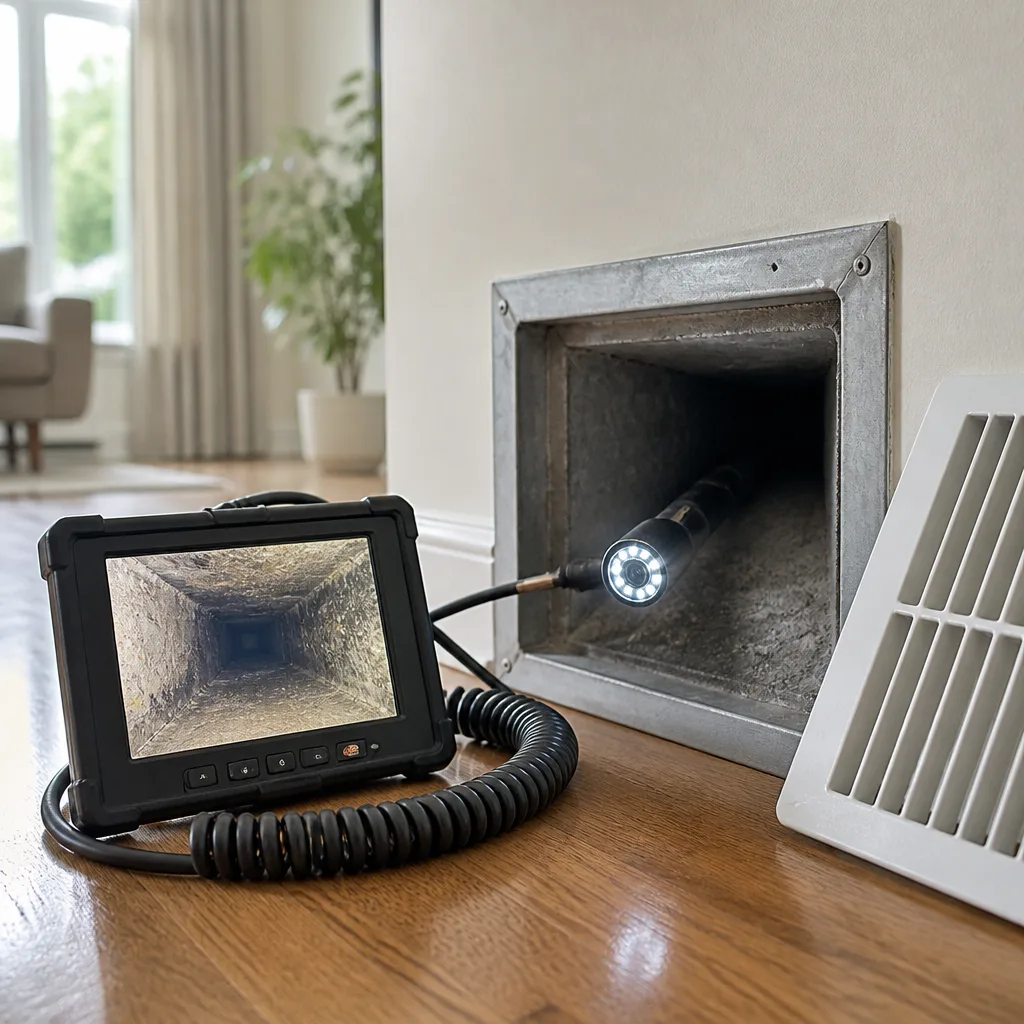
- System assessment and baseline photos. Before anything moves, we inspect the accessible ductwork, photograph the register interiors and plenum, and check whether existing duct damage will affect the cleaning plan.
- Containment setup. A negative air machine (Abatement Technologies equipment is standard for this) is connected through an access point, and every register is sealed so the duct system is under suction throughout the job.
- Mechanical agitation. A Rotobrush rotary brush system, with its motor-driven whip and adjustable brush heads, is fed down each branch line, scrubbing the duct wall from register to trunk. Nikro air whips and nozzle tools are used on the trunk and plenum where a brush isn’t practical.
- Extraction and filter capture. Debris loosened by the brush travels to the negative air machine’s HEPA filter and is captured. Because the system stays sealed, none of it enters the room.
- Sanitizing and air quality treatment (optional but recommended for some households). A sanitizing fog or antimicrobial application is drawn through the ductwork to address microbial and allergen residue. This is the step most relevant to households with allergies, asthma, or pets.
- Seal inspection and post-clean photos. Every connection, boot, and collar is checked for seal integrity while the system is accessible. Damage gets documented for a repair conversation, not glossed over.
- HVAC coil and blower check. Because the ducts feed the air handler, the evaporator coil and blower wheel are the two places dust hides after a duct clean. Our HVAC cleaning service addresses that side of the system if the inspection shows it’s needed.
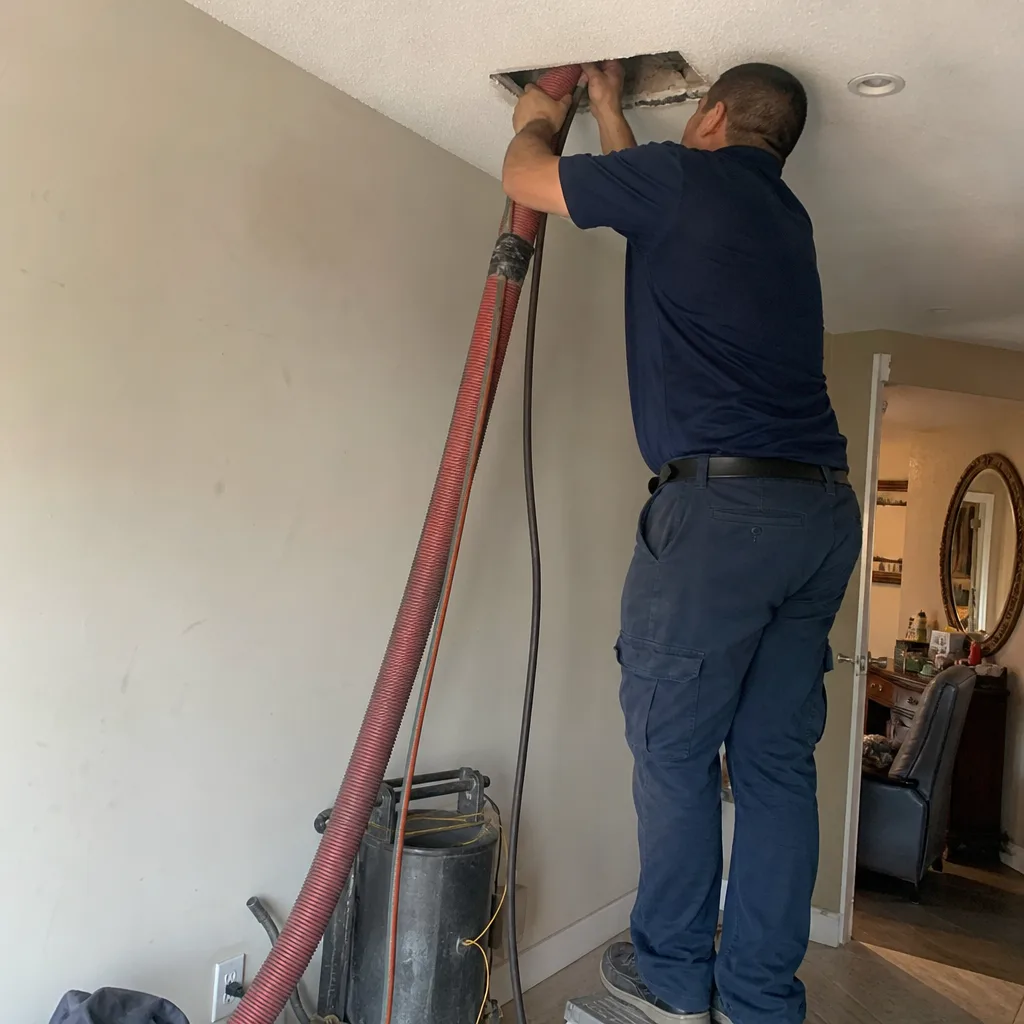
- Before-and-after photos. We show the homeowner photos of their own ducts, so there’s no guesswork about whether the work was done.
That’s the process, and it takes a professional machine to run it. A homeowner with a shop vac can replicate steps 1, part of step 3, and step 8.
Air Quality, Sanitizing, and What Clean Means Beyond Debris
Duct cleaning removes particulate; it doesn’t automatically fix air quality. That distinction is why we treat air quality as a separate service rather than a checkbox. Two things make the difference in a San Juan Capistrano home.
Filtration and humidity
Filtration belongs at the air handler, not just in a room filter, and a purpose-built media filter cabinet is a different category of product than a 1-inch slot filter. Honeywell and Aprilaire filtration and humidity-control products are what we typically recommend because they integrate with standard residential air handlers and give the blower a compatible filter surface. In a mild Southern California climate, humidity control inside a sealed home is less about cooling load and more about keeping the interior air balanced, which matters for occupants with respiratory sensitivity.
Sanitizing as a follow-on, not a substitute
Once a system is physically clean, an antimicrobial application through the ducts can address what a brush can’t reach. We use this where odor, visible growth near an air handler, or a household with allergies or pets calls for it. It isn’t a replacement for cleaning; the two work as a sequence. Our San Juan Capistrano air duct cleaning team can walk you through what a sanitizing pass is and isn’t, and our main site describes the full service menu.
How to Decide for Your Own Home
The decision turns on whether you’re trying to address a visible surface problem or the interior of the system. Here’s how we think about it, as a simple decision path.
- Are the only symptoms visible dust at registers and grilles? Clean the register faces and replace the filter yourself. That handles the visible layer, at zero cost beyond materials.
- Has the dryer vent run gone a year or more without attention? Clear the reachable lint yourself, and schedule a full-length vent cleaning. That’s a safety issue.
- Have you noticed musty odor, visible growth near the air handler, or a room that’s consistently dustier than others? Those symptoms suggest contamination in the ducts or the air handler. That’s a professional call.
- Has anyone in the household had new respiratory or allergy symptoms? Have the system assessed before assuming a filter will fix it. The ducts and coil are the two most common contributors.
- Have you already done a DIY attempt and the problem got worse? Stop trying. A professional assessment that documents what happened is less expensive than another failed attempt.
Two practical notes for San Juan Capistrano homeowners. First, this area’s housing stock includes homes from several decades, some with older rigid sheet-metal ductwork and some with more recent flex retrofits; the assessment plan changes with the duct type. Second, a home with an accessible attic run is easier to service than one where ducts are buried in soffits, so ask for an assessment that reflects your specific layout rather than a standardized package.
Common Mistakes to Avoid
- Running a shop vac into a supply run with the system’s blower on. The airflow carries loosened particulate straight into the room. Turn the system off before attempting anything at the register face, and leave interior ductwork to a professional.
- Using a duct cleaning kit on flex duct. The kit’s brush head is too aggressive for a flex liner and easily compresses or tears it. Flex duct in San Juan Capistrano attic runs is the single most common victim of DIY attempts.
- Skipping the filter check after cleaning. A dirty filter re-contaminates a just-cleaned system within days. Replace or upgrade the filter before or during the professional clean, not weeks later.
- Assuming a peppermint-oil spray or “allergen” additive substitutes for physical cleaning. Odor masking has no effect on the debris load. Sanitizing works after removal, not instead of it.
- Neglecting the dryer vent in favor of duct cleaning. The dryer vent is the highest fire-risk duct in the home. Fire safety starts at the dryer vent, and treating it as an afterthought is a genuine mistake.
- Choosing a duct cleaner on price alone, without a written estimate. A low advertised number that becomes a larger invoice once the technician is on site is a common complaint in this trade. Ask for a per-system written estimate and before-and-after photos before work starts.
- Ignoring seal leaks after cleaning. A clean system with leaky boot collars pulls attic or crawlspace air into the supply. Seal repair and cleaning belong together.
See the difference
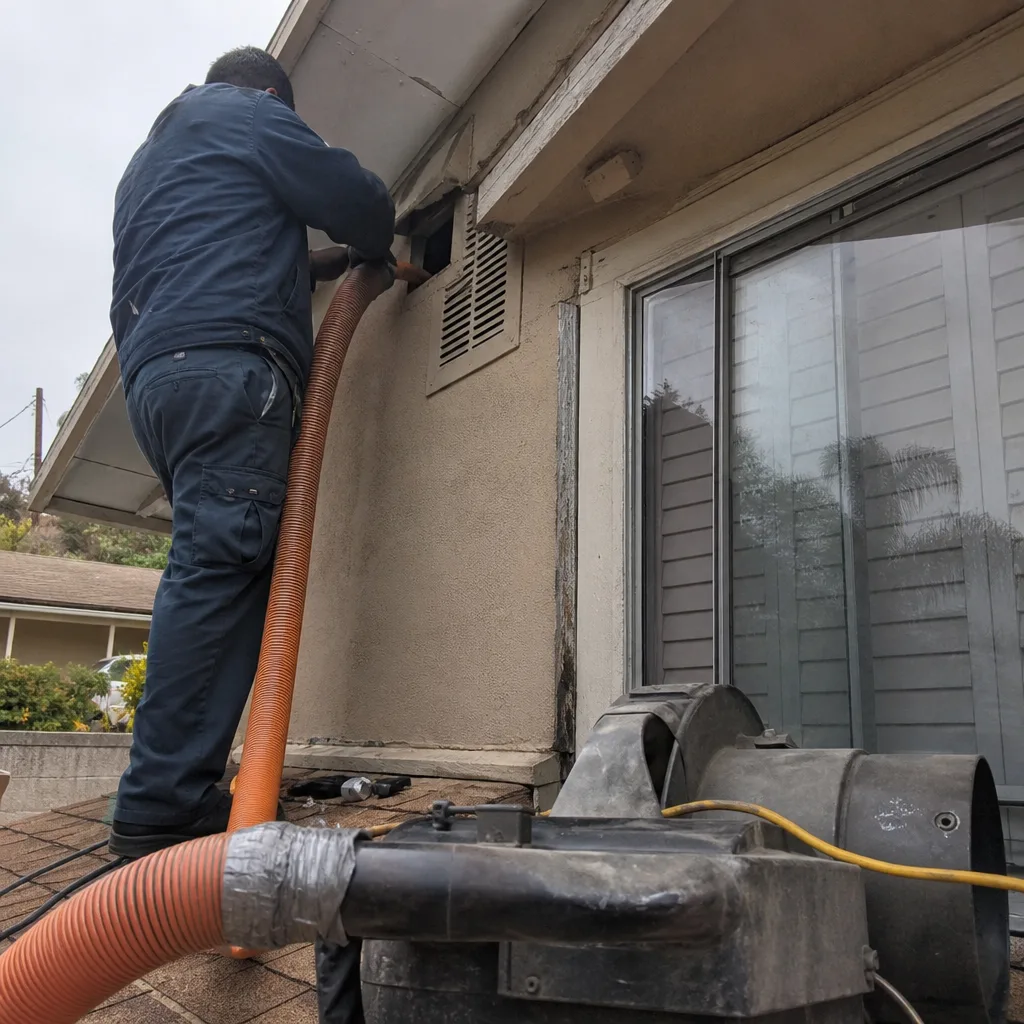 Before
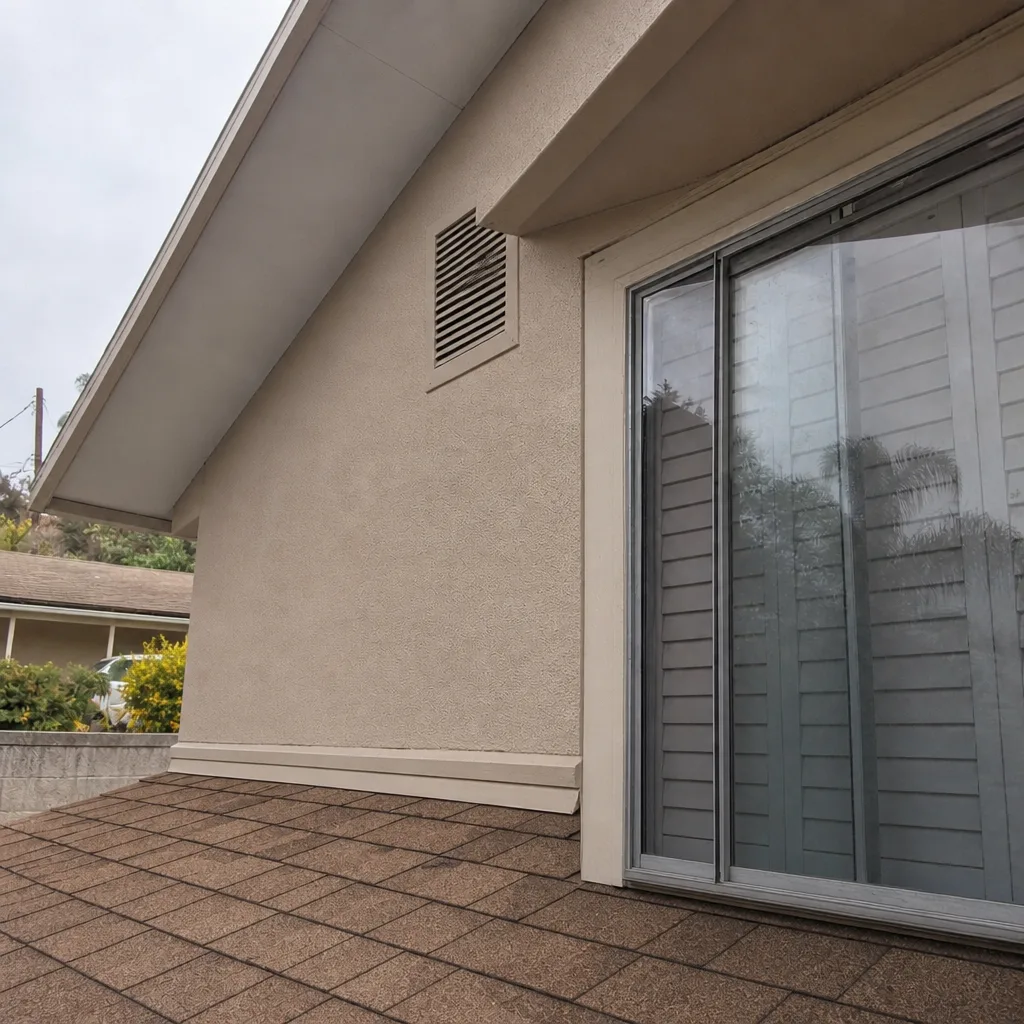 After
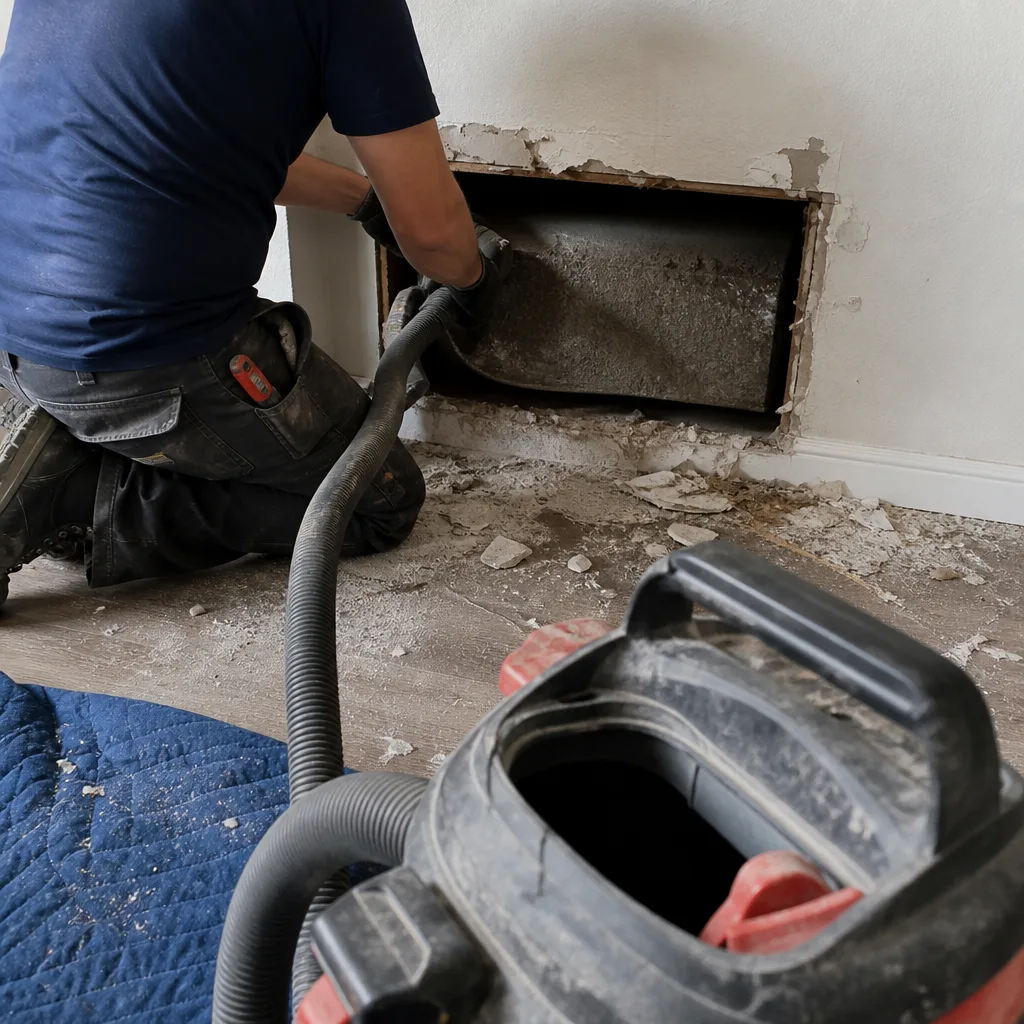 Before
 After
 Before
 After
When to Call a Professional
Call a professional when the problem is inside the ductwork or when the diagnosis is unclear. Specific signs: a musty or stale odor every time the system runs, visible biological growth on or near the air handler, unusually heavy dust in one room but not others, an airflow problem that filter changes haven’t fixed, a dryer that takes noticeably longer than it used to, or duct damage you can see in an accessible attic or basement. In any of these cases, the right next step is an assessment from someone with the equipment to look and the equipment to fix. San Juan Capistrano Air Duct Cleaning Pros offers free estimates in San Juan Capistrano. Call (844) 443-3974. We answer 24/7. Fast dispatch from 7am to 7pm, Sunday through Friday. Our technicians have up to 15 years of experience, and every quote is written per system before work begins.
Frequently Asked Questions
It’s worth doing for the register and grille surfaces, filter replacement, and the reachable section of dryer vent – tasks a homeowner can complete safely and effectively. It is not worth doing for the interior of the ductwork, because consumer equipment cannot achieve the negative pressure required for source removal. If the register face is the only problem, DIY is enough. If the interior system is contaminated, professional service is the correct call. Call (844) 443-3974 for an exact quote; estimates are free.
Typically because they’re not the same service. A low advertised figure often covers a surface vacuum of the registers and a photo op, without negative-pressure containment or rotary agitation of the duct walls. The professional-grade machine and the multi-step process are what separate a full-system clean from a surface pass. Ask every provider what equipment they’ll use and whether they photograph the ducts before and after. A written per-system estimate is the reliable basis for comparing quotes. Call (844) 443-3974 for an exact quote; estimates are free.
Before-and-after photos of your own ducts, taken at the same access points. That’s the standard we hold ourselves to, and it removes the guesswork. The photos should show the interior of the runs and the plenum, not just the register exterior. If a provider won’t show you the duct interiors, that’s a signal. Call (844) 443-3974 for an exact quote; estimates are free.
There’s no universal answer – it depends on the home. Households with pets, occupants with allergies or asthma, recent remodeling that generated construction dust, or visible growth in the system need it more often; homes without those factors can go longer. The honest answer is to have the system inspected any time you notice symptoms and to address what the inspection shows. A blanket schedule isn’t useful. Call (844) 443-3974 for an exact quote; estimates are free.
Yes, but the repair is usually a separate line item. Compressed flex duct, dislodged interior insulation, and damaged boot collars all get cleaned around during the cleaning visit, then repaired afterward with proper mastic and mechanical connections. In some cases the damage is small enough that the repair can be worked into the same visit; in others it’s a follow-up. Either way, the assessment at the start of the visit documents it with photos. Call (844) 443-3974 for an exact quote; estimates are free.
Rotobrush rotary brush systems and Nikro equipment for duct work, and Abatement Technologies for negative air containment are the professional standards. For filtration and humidity control after cleaning, Honeywell and Aprilaire products are common. Any of these names in a company’s equipment list means the work will be done to that equipment class rather than with a consumer-grade vacuum. Our own process uses Rotobrush, Nikro, and Abatement Technologies equipment. Call (844) 443-3974 for an exact quote; estimates are free.
The Bottom Line
DIY duct cleaning isn’t a smaller version of the professional job – it’s a different job with a different machine behind it. The tasks a homeowner can do well (register cleaning, filter replacement, reachable dryer vent lint clearing, visual documentation) are genuinely useful and we encourage them. The tasks that require negative pressure, rotary agitation, and sealed containment cannot be replicated with consumer equipment, and attempting them can damage flex duct, dislodge insulation, and compromise boot collars in ways that cost more to repair than the original cleaning would have. Judge the job on outcome, not invoice. Get a written per-system estimate, ask for before-and-after photos of the duct interiors, and choose the provider with the equipment to do the work properly. For San Juan Capistrano homeowners ready to schedule, call (844) 443-3974 for a free estimate. We answer 24/7. Fast dispatch from 7am to 7pm, Sunday through Friday.
Written by the team at San Juan Capistrano Air Duct Cleaning Pros.