
Last updated November 24, 2026
 Whole-home duct cleaning
 Dryer vent cleaning
 Camera inspection
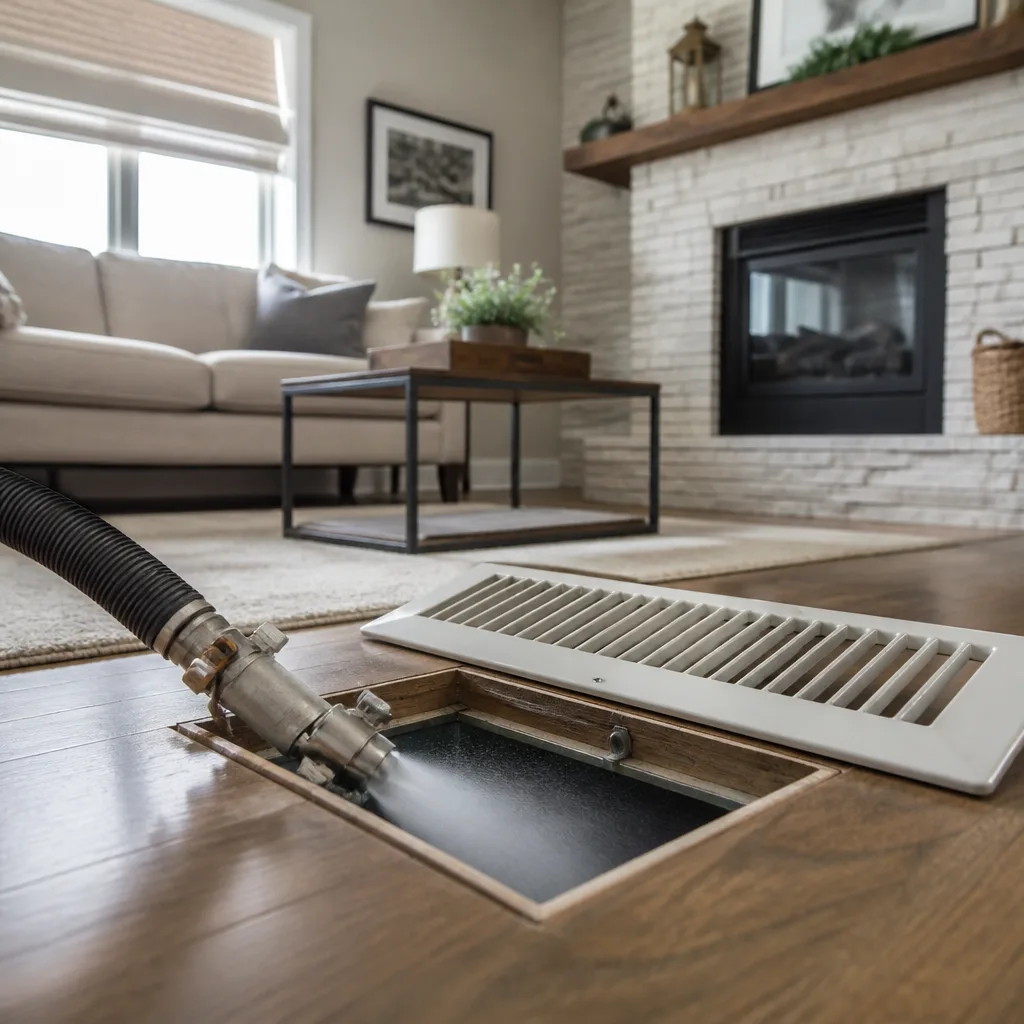 Sanitizing & deodorizing
Whole-system duct and dryer vent check with before-and-after photos - you see exactly what came out of your vents
That "$99 whole-house special" is a bait ad - the real number appears once they are in your hallway, or the "clean" is a shop-vac at the register. We photograph the inside of your ducts before and after instead.
The Complete Guide to Air Duct Cleaning in San Juan Capistrano
Most air duct guides are written for climates with hard winters and forced-air heating that runs nine months a year. San Juan Capistrano isn’t that place. Here we average 282 sunny days, and our marine layer humidity swing creates entirely different contamination problems inside ductwork than the freeze-and-thaw cycle guides describe. That matters because the contamination we see here has less to do with heating season and more to do with moisture, older housing stock, and ducts that were never designed for the humidity they now live in. This guide walks through what actually happens inside San Juan Capistrano ductwork, how professional cleaning differs from a shop vac and a promise, and how to read the results before you pay.
Quick Answer
Air duct cleaning in San Juan Capistrano means mechanically agitating and removing debris from the entire duct system with commercial-grade equipment, not just vacuuming at the registers. A proper job uses rotary brush systems like Rotobrush, high-CFM negative air machines, and photographic documentation of the before-and-after condition. For most San Juan Capistrano homes, professional air duct cleaning takes a few hours and is priced per system by a written estimate agreed before work begins.
Styles & brands we work with
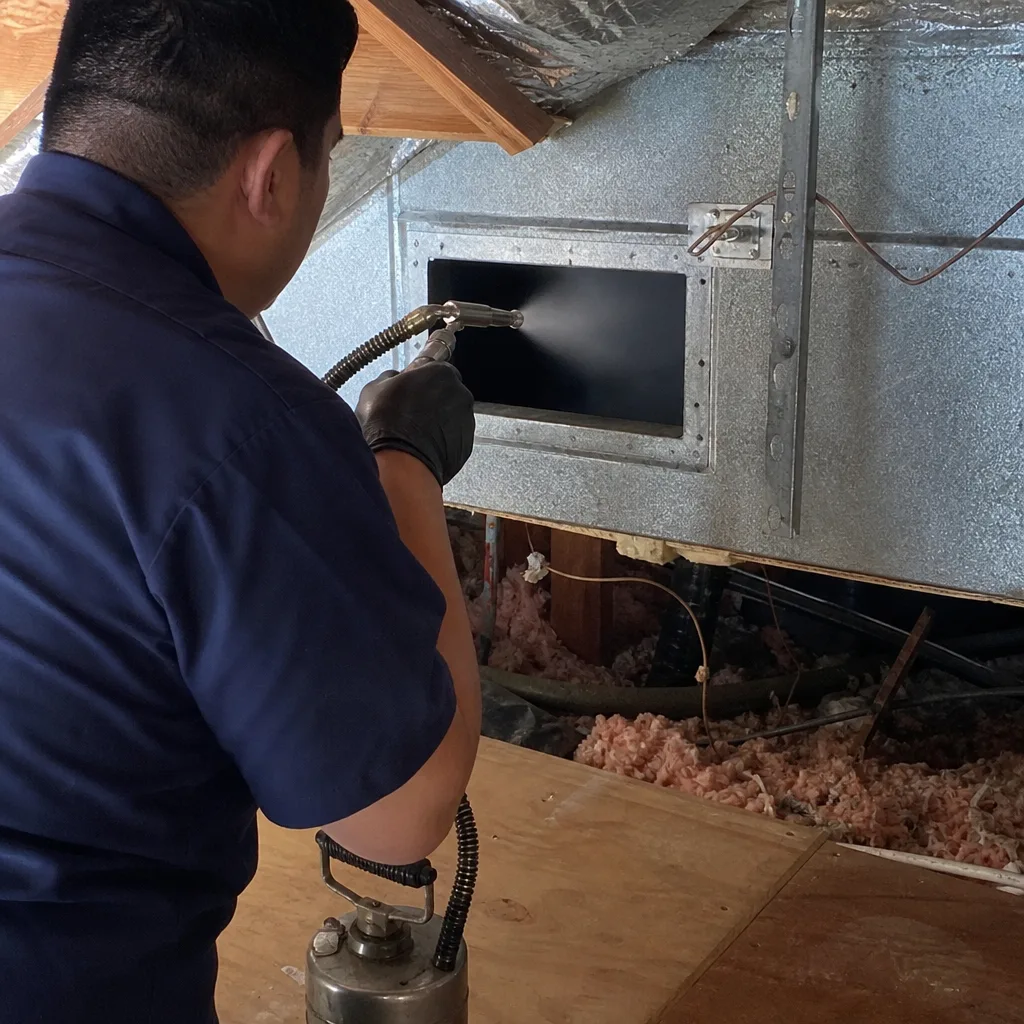
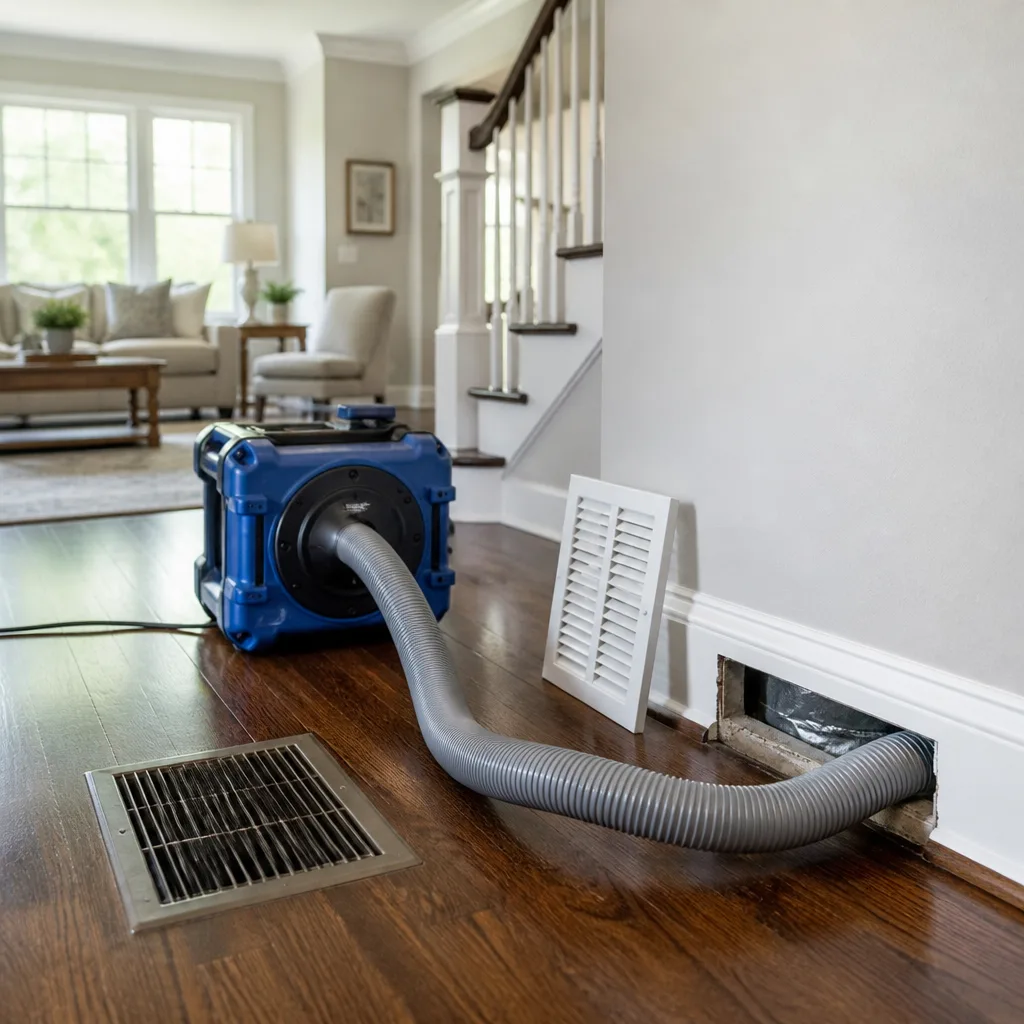
- Whole-home duct cleaning
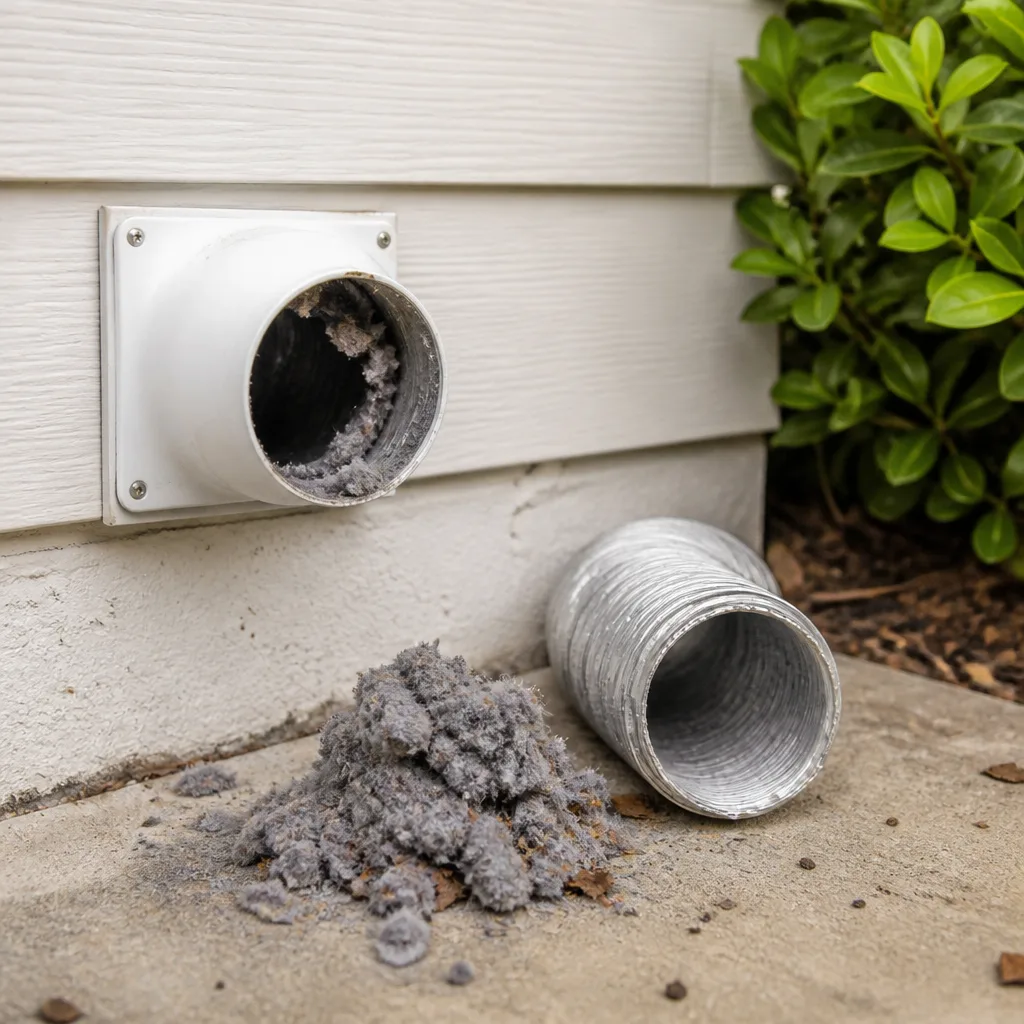
- Dryer vent cleaning
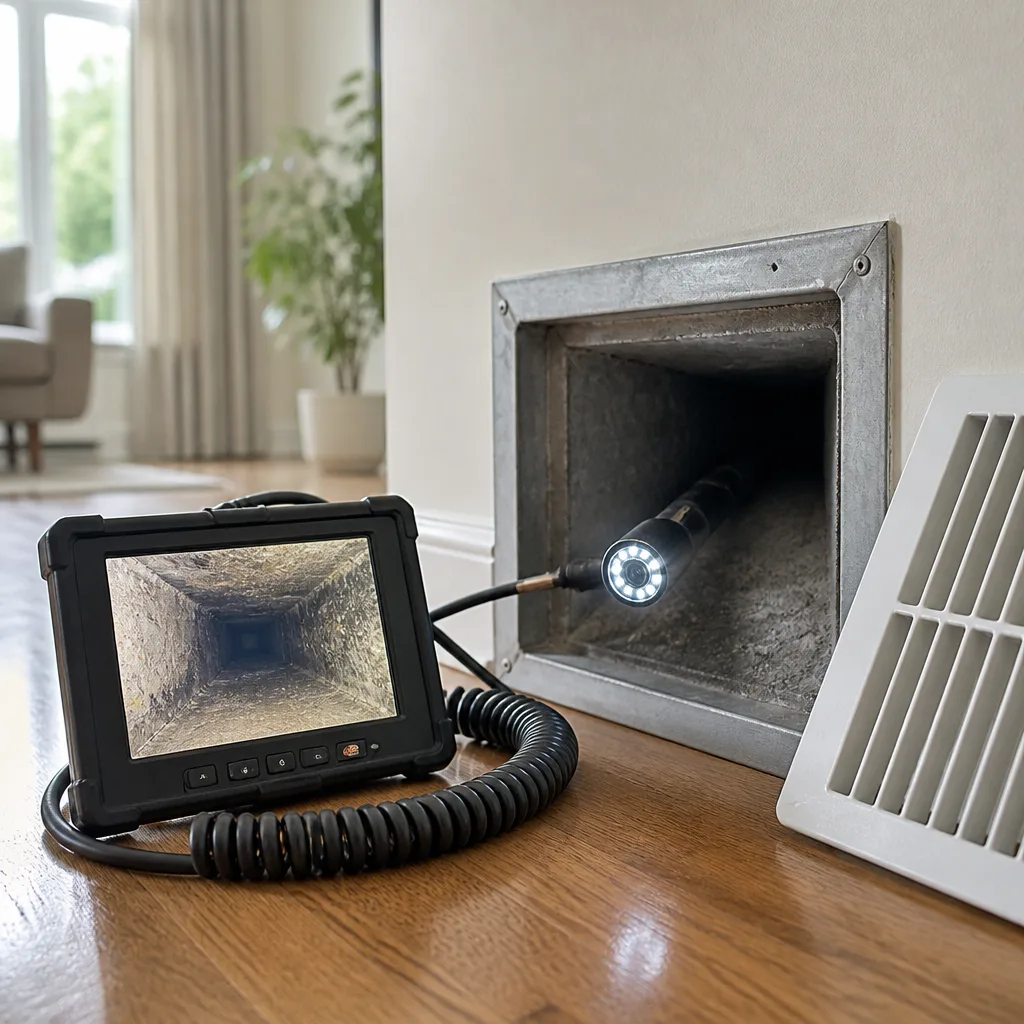
- Camera inspection
- Sanitizing & deodorizing
Table of Contents
- Why San Juan Capistrano Ducts Get Dirty Differently
- The Marine Layer Problem: Humidity and Flex Duct Joints
- Older Housing Stock and Galvanized Sheet Metal Ducts
- Source Removal vs. Surface Coating: What You Actually Need
- What Commercial-Grade Equipment Really Does
- The Full Cleaning Process, Step by Step
- How to Read a Post-Cleaning Inspection Report
- How Much Air Duct Cleaning Costs in San Juan Capistrano
- Dryer Vents, HVAC Cleaning, and the Rest of the System
Why San Juan Capistrano Ducts Get Dirty Differently
National duct cleaning advice assumes a few things that don’t hold here. It assumes months of closed windows, heavy heating use, and a seasonal pattern where ducts dry out completely between heating cycles. San Juan Capistrano runs the opposite way: windows open much of the year, mild temperatures mean the HVAC system cycles on and off rather than running continuously, and the coastal influence keeps a band of moisture in the air that inland communities don’t see to the same degree.
That combination produces a specific contamination profile. Dust and pollen settle into ductwork during the dry stretches, then a marine layer morning raises indoor humidity just enough to make those deposits slightly damp. Repeat that cycle a few hundred times a year and you get what we see again and again: a fine dark film on duct walls, debris that clumps rather than blows loose, and organic material that holds moisture in exactly the places where mold likes to start.
The housing stock adds another layer. San Juan Capistrano has a large share of homes built before 1990, especially around the historic district and the older neighborhoods near Los Rios Street. These were built with construction practices and duct materials that age in specific ways. Some have galvanized sheet metal trunks that are still perfectly serviceable. Others have early-generation flex duct that has been sitting behind drywall for decades. The two need different cleaning approaches, and they fail in different ways.
What you’ll learn in this guide:
- How coastal humidity accelerates contamination in flex duct joints specifically
- Why pre-1990 galvanized ducts need different brush-and-vacuum protocols
- What San Juan Capistrano Air Duct Cleaning Pros mean by source removal and why some contractors upsell coating instead
- What commercial-grade negative air equipment actually accomplishes
- How to read the inspection report before you sign off
The Marine Layer Problem: Humidity and Flex Duct Joints
Flex duct is a ribbed, spiral-wound product, and those ribs create exactly the wrong environment for humid air. Every ridge on the inside of the duct is a place where dust catches and moisture condenses. Where two sections join, the connection is a potential gap. When indoor humidity rises into the range our marine layer produces, those gaps take on water vapor that the surrounding drywall and framing don’t see.
What this means in practice: a flex duct system in San Juan Capistrano that has developed a small unsealed joint will show a dark, damp patch inside the duct at that joint long before the same system elsewhere would. Add pollen season and normal household dust, and you have a food source, a moisture source, and a place for microbial growth to start. This is why we take joint condition as seriously as duct interior when we’re cleaning.
What the humidity cycle actually does inside a duct
- Dry season deposits: Pollen, dust, skin cells, and pet dander settle on duct walls while the system runs and the air is dry.
- Humidity lift: Marine layer mornings push ambient humidity up, and duct interiors equilibrate with indoor air.
- Deposit wetting: Fine particulate deposits become damp enough to bind and darken. Organic material begins breaking down.
- Joint infiltration: Damp deposits are pulled toward any unsealed joint, where negative pressure from the air handler encourages accumulation.
- Microbial seeding: Where moisture stays resident, spores that arrived through the supply airstream find a surface and a food source.
The fix isn’t just cleaning. A duct that gets cleaned but keeps its leaky joints will repeat the cycle. That’s why duct repair and sealing belongs alongside cleaning rather than as a separate, later service. Clean the system, seal the gaps, and the moisture pathway closes.
Older Housing Stock and Galvanized Sheet Metal Ducts
Pre-1990 homes near the historic district, along the older streets off Camino Capistrano, and in parts of San Juan Capistrano that predate the modern subdivision era were built with what we call hard duct. Galvanized sheet metal trunks and branches, seams folded and joined, sometimes insulated on the exterior with older fiberglass. This is a good system in many ways. It lasts. It’s rigid, so airflow stays predictable. And it’s very cleanable when it’s handled correctly.
But it’s not handled like flex duct. Galvanized duct needs rotary brush heads that can work the flat walls without gouging the metal, followed by a high-CFM vacuum pulling from the correct end. Flex duct needs gentler brush settings because the interior liner tears easily. Get those two protocols confused and you’ll leave debris behind in one case and damage ductwork in the other.
Older San Juan Capistrano homes also carry the accumulated fingerprints of decades of renovations: a duct run added here, a branch terminated there, a section that lost its insulation wrap at some point. Those overhauls tend to create exactly the kind of small gaps and dead legs where contamination pockets form. In our experience, these are the ducts that benefit most from a thorough cleaning combined with sealing, because the underlying system has more places for air to escape and re-enter than the homeowner realizes.
If the home is old enough to have galvanized duct, ask any contractor you consider:
- What brush head and rotary machine will be used on the metal sections?
- How will they handle any flex sections that were added during a remodel?
- Will they inspect for gaps and dead legs, and document what they find?
- Is sealing offered as part of the work, or only as a separate trip?
A contractor who can answer those four questions clearly is a contractor running a real system, not a handheld vacuum and a sales script.
Source Removal vs. Surface Coating: What You Actually Need
Source removal is the standard the industry recognizes. It means physically dislodging and extracting the contamination from the duct interior, then containing it so it doesn’t spread through the house. The equipment matters. The technique matters. The result is ductwork that’s genuinely cleaner because the material causing the problem is gone.
Surface coating means applying a sealant or antimicrobial coating to the inside of the duct after cleaning. In the right circumstances and with a properly prepared surface, coating has legitimate uses: sealing porous duct board, protecting a surface that has been thoroughly cleaned and dried. What it is not is a substitute for cleaning.
Some contractors in the San Juan Capistrano market pitch coating as an add-on during a cleaning call, sometimes in terms that make it sound necessary. In our experience, coating sold before the duct is genuinely clean is covering a problem, not fixing it. If a duct surface still has deposits on it, sealing over them makes it impossible to remove them later and doesn’t stop the moisture issue that created the deposits in the first place.
When coating makes sense:
- Duct board or other porous interior surfaces that can’t be fully stripped
- A system that has been properly cleaned and verified dry, where a protective layer adds real value
- Repair situations where a patched surface benefits from an added seal
When coating is a sales tactic:
- Offered before any cleaning has happened
- Presented as an alternative to source removal
- Pitched with a claim that cleaning alone “isn’t enough” without any evidence of what was found in your specific system
Ask any contractor to show you the pre-cleaning photos, explain what they found, and recommend coating only if the specific condition warrants it. A real recommendation is specific to your ductwork. A generic one is a commission.
What Commercial-Grade Equipment Really Does
The gap between professional duct equipment and a shop vac attached to a register isn’t marketing. It’s measurable. Duct cleaning machines move a volume of air through a contained system that a shop vac can’t match, and they use rotary brushes that actually agitate duct walls rather than just pulling loose surface dust.
What we use and why:
- Rotobrush: A rotary brush system that mechanically agitates duct walls, dislodging debris that has bound to the surface. The brush does the work a vacuum alone cannot, especially in ribbed flex duct and along the seams of sheet metal.
- Nikro: Professional-grade duct and HVAC cleaning equipment. The brand is a standard in restoration work, where containment and thorough extraction are non-negotiable.
- Abatement Technologies: Air filtration and negative-air equipment that keeps the job contained. When ductwork is opened up, airborne debris has to go somewhere. Negative air pressure means it goes into the machine, not into the room.
Here’s the concept that separates a real job from a demo: CFM (cubic feet per minute). A negative air machine moves hundreds to over a thousand CFM through the duct system, pulling air toward the containment point continuously while the brush loosens debris. A shop vac might move a hundred CFM at the hose, and that’s only at the register where it’s attached. In the duct run twenty feet away, the vacuum’s pull is negligible. Debris loosened by a brush and not captured by real airflow just relocates to the nearest downstream register.
That’s why “we vacuumed every register” isn’t a cleaning method. It’s a gesture. Real cleaning brings the air volume, the containment, and the mechanical agitation together at the same time.
For drying and post-cleaning air quality, we use Honeywell and Aprilaire products for filtration and humidity control. Those are the same brands used in serious residential HVAC work, and they fit the post-cleaning picture: a clean duct system paired with proper filtration is a system that stays clean longer. Abatement Technologies equipment handles filtration and containment during the work itself.
The Full Cleaning Process, Step by Step
Here’s what a professional duct cleaning on a San Juan Capistrano home involves, in order. If a contractor’s process doesn’t look roughly like this, ask why not.
- System survey. Before any machine is turned on, we walk the system. Register count, duct material, joint condition, insulation condition, any obvious gaps or dead legs. The survey determines which brush heads and airflow volumes the job needs.
- Protection and containment. Floor and furniture protection goes in place. Negative air equipment is set up at the main trunk access point so that once the system is opened, airflow is contained.
- Access creation. Registers and returns are opened. Where duct is inaccessible, access holes are cut and later resealed. This is the step a lot of cheap jobs skip entirely, because you can’t clean a duct you can’t get into.
- Rotary brush pass. The Rotobrush rotary brush is run through every duct run, agitating the interior walls. Brush heads are matched to duct material: firm on galvanized, gentle on flex. This is where bound deposits get freed.
- High-CFM extraction. While the brush works, the negative air machine is pulling. Loose material goes into containment, not into the room or downstream.
- Return and plenum cleaning. Returns carry as much debris as supplies. Plenum boxes get the same treatment, since they’re where the system’s air mixes.
- Air handler and coil cleaning. The blower, coil, and drain pan are cleaned as part of HVAC cleaning. A clean duct system pulling air through a dirty coil just re-contaminates itself.
- Sealing and repair, where needed. Any gaps, disconnected joints, or damaged sections found during the survey are repaired and sealed before the system is closed back up.
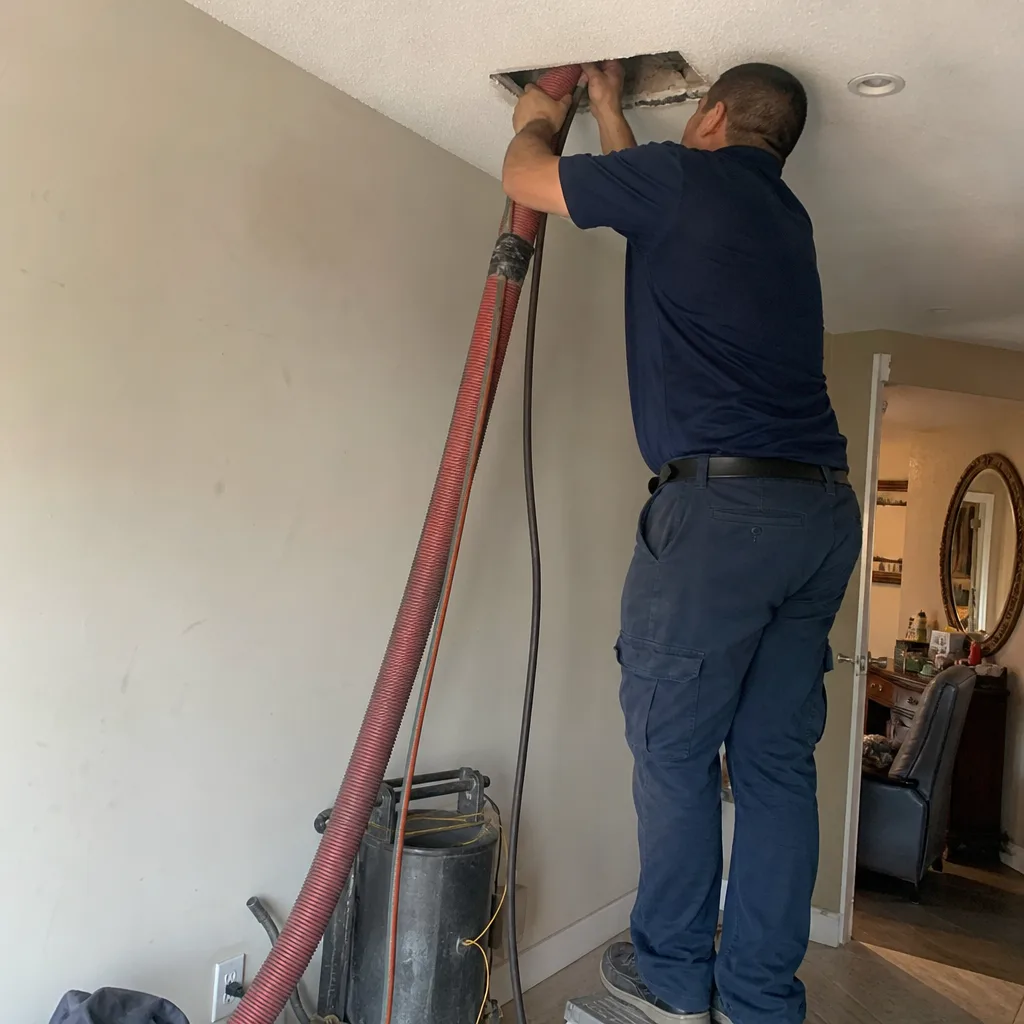
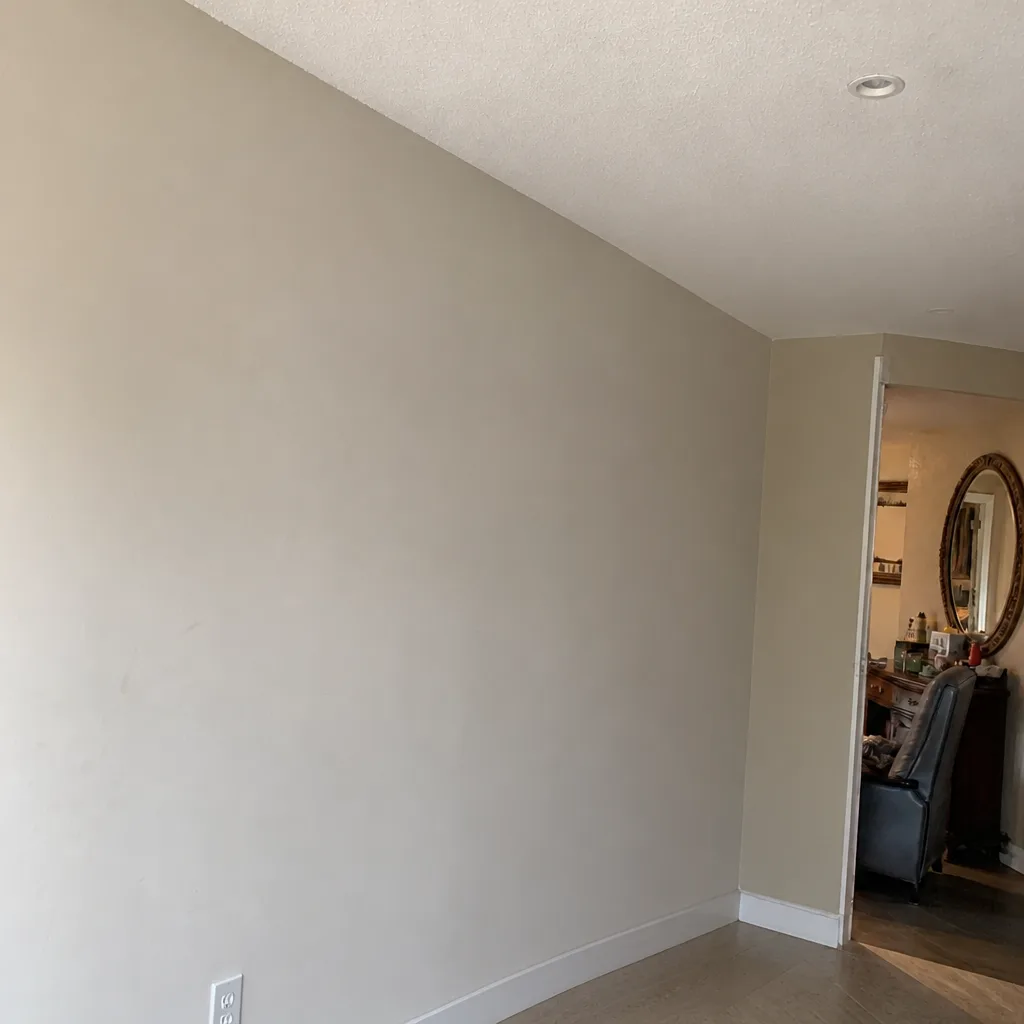
- Verification and documentation. Photos of each duct run before and after, a written summary of what was found and what was done, and a review of the results with you before the job is signed off.
Steps six through nine are the ones that turn a cleaning into a fix. A job that stops at step five is a partial job. That’s one reason we say we clean, repair, and seal: the repair and sealing are what stop the system from heading right back to where it started.
How to Read a Post-Cleaning Inspection Report
A cleaning report is the only evidence you have after the truck leaves. If it’s thin, you can’t verify anything. If it’s specific, it tells you exactly what state your ducts are in. Here’s what to look for.
Photographic documentation
- Before and after photos of every duct run. Not one photo of a register, not a phone shot from the access hole that could be any house. Each run, before and after.
- Time-stamped or otherwise traceable. Even just a consistent workflow order documented in the report is better than nothing.
- Close-ups at joints and transitions. These are where contamination was concentrated. If the report shows the duct trunks and skips the joints, the evidence is incomplete.
- Photos of any sealing or repair. If gaps were sealed, you should see the before-and-after of that work too.
Written findings
- Duct material identified (galvanized vs. flex vs. duct board)
- Any damage found, and whether it was repaired on site or flagged for follow-up
- Coil and air handler condition, since those affect air quality as much as the duct itself
- The specific equipment used (Rotobrush, Nikro, negative air machine, filtration equipment) – specifics are the mark of a real report
What’s missing from a weak report
A one-page invoice that says “cleaned ducts” and nothing else is not a report. Neither is a photo of the truck, the crew, or a clean register cover. If a contractor can’t show you the inside of your own duct runs before and after, the claim is unverifiable. Ask for the documentation before you sign off and before you pay. A good contractor expects the question and has the answer ready.
This is also the point where sealing recommendations should come in writing. If a joint gap or disconnected run was found, it should be documented and quoted, not mentioned verbally and left for a follow-up call.
How Much Air Duct Cleaning Costs in San Juan Capistrano
Cost here depends on the system size, duct material, access difficulty, and whether repair or sealing is needed. San Juan Capistrano homes tend to sit in a range where individual systems are mid-size, which keeps most jobs at a predictable scale. What we won’t do is quote you a per-vent number, because per-vent pricing is exactly how the industry’s bait-and-switch reputation started. One flat price per system, agreed in writing before work starts.
Typical estimated ranges for San Juan Capistrano:
| Service | Typical Estimated Range |
|---|---|
| Air duct cleaning (whole system) | $350 – $650 |
| Dryer vent cleaning | $100 – $200 |
| HVAC cleaning (air handler, coil, blower) | $200 – $450 |
| Duct repair and sealing | Priced per job by estimate |
| Air quality and sanitizing | Priced per job by estimate |
Those are typical estimates and the written estimate is what sets the final price. Two things push a job toward the upper part of a range: difficult access (long runs, ducts buried in tight attic spaces, systems that require multiple access holes) and finding repair work that wasn’t obvious during the initial look. Neither should surprise you; both should be quoted before work continues.
Why are some quotes so much cheaper?
A quote that undercuts the range above by a lot isn’t a better deal. It’s a shorter job. Cheap quotes almost always mean one of the following: only the reachable registers are vacuumed, no negative air containment is used, no rotary brush is run, no documentation is produced, and no repair or sealing is offered. You get a receipt that says “duct cleaning” and the same contamination you started with. The equipment brands we use, Rotobrush and Nikro, cost a great deal more than a shop vac and a wand, and the difference shows up in the work. It’s also why the estimate is free: you should be evaluating the process, not paying to hear a price.
Dryer Vents, HVAC Cleaning, and the Rest of the System
Ductwork isn’t the only air path in a San Juan Capistrano home, and the parts most likely to cause a weekend problem are usually the ones people forget about.
Dryer vents. This is a fire-safety service, not an optional accessory. Lint accumulates in the vent run with every load, and the longer the run, and the more turns it takes, the faster it packs in. A clogged dryer vent means the dryer works harder, dries slower, and generates more heat in an area that’s meant to carry it away. dryer vent cleaning is worth doing on its own schedule, separate from duct cleaning, and it’s a service we treat with the same equipment seriousness as the ductwork itself. Fire safety starts at the dryer vent.
HVAC cleaning. The air handler, evaporator coil, and blower are where the air actually gets conditioned. A dirty coil loses efficiency, a dirty blower throws debris back into clean ducts, and the drain pan in our humidity is a standing-water risk if it isn’t cleaned and checked. Cleaning the ducts without cleaning the coil is like washing a car and skipping the wheels.
Duct repair and sealing. This is the part most contractors skip. Gaps at joints, disconnected runs, and unsealed penetrations let conditioned air leak out and let unconditioned air (and the moisture it carries) leak in. In a San Juan Capistrano home running a mild-climate HVAC system with plenty of humidity in the ambient air, those leaks matter. Sealing closes the loop that cleaning opens.
Air quality and sanitizing. For households with allergies, asthma, or pets, the standard cleaning protocol often isn’t the whole answer. Air quality and sanitizing work extends to microbial and allergen control, using filtration and humidity-control products from Honeywell and Aprilaire, and where appropriate, Guardsman products for the finishing protection side. This is built for air quality, not just airflow. If the household is sensitive, this is the service to discuss during the initial estimate, not afterward.
Common Mistakes to Avoid
- Hiring on price alone. The lowest bid is almost always a register-vacuum-and-a-receipt job. Two-thirds of the equipment and process that make a cleaning real are not on a price sheet, so the quote alone can’t tell you what you’re buying.
- Accepting a per-vent price. Per-vent pricing encourages contractors to rush and creates an incentive to define “vent” in whatever way produces the highest total. Whole-system pricing, agreed in writing, removes the incentive.
- Letting coating get sold before cleaning. A coating applied over uncleaned duct walls traps the contamination. If a contractor leads with coating, ask why before you agree to anything.
- Skipping the air handler and coil. A clean duct system pulling through a dirty coil is a system that re-contaminates itself with every cycle. HVAC cleaning belongs on the same job or on the same schedule.
- Ignoring the dryer vent. Many San Juan Capistrano homes have dryer vents with long runs and multiple elbows. That’s exactly the configuration lint loves. Treat it as a fire-safety item, not an upsell.
- Signing off without photos. If you can’t see the before and after of your own duct runs, you have no way of knowing what actually happened. Ask for the documentation before you pay.
- Cleaning without sealing. In our humidity, leaky joints refill with damp debris faster than sealed ones. Cleaning alone in a San Juan Capistrano home is a shorter-lived fix than cleaning plus sealing.
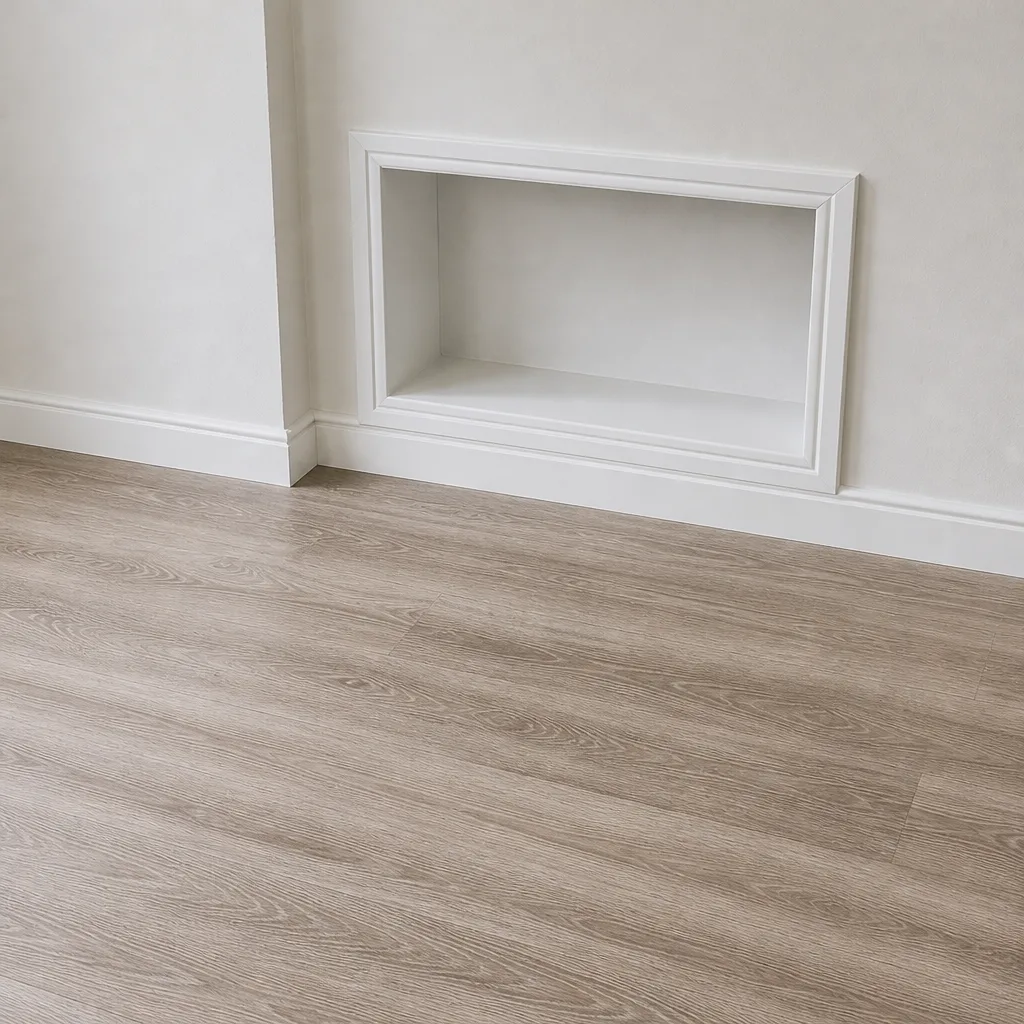
See the difference
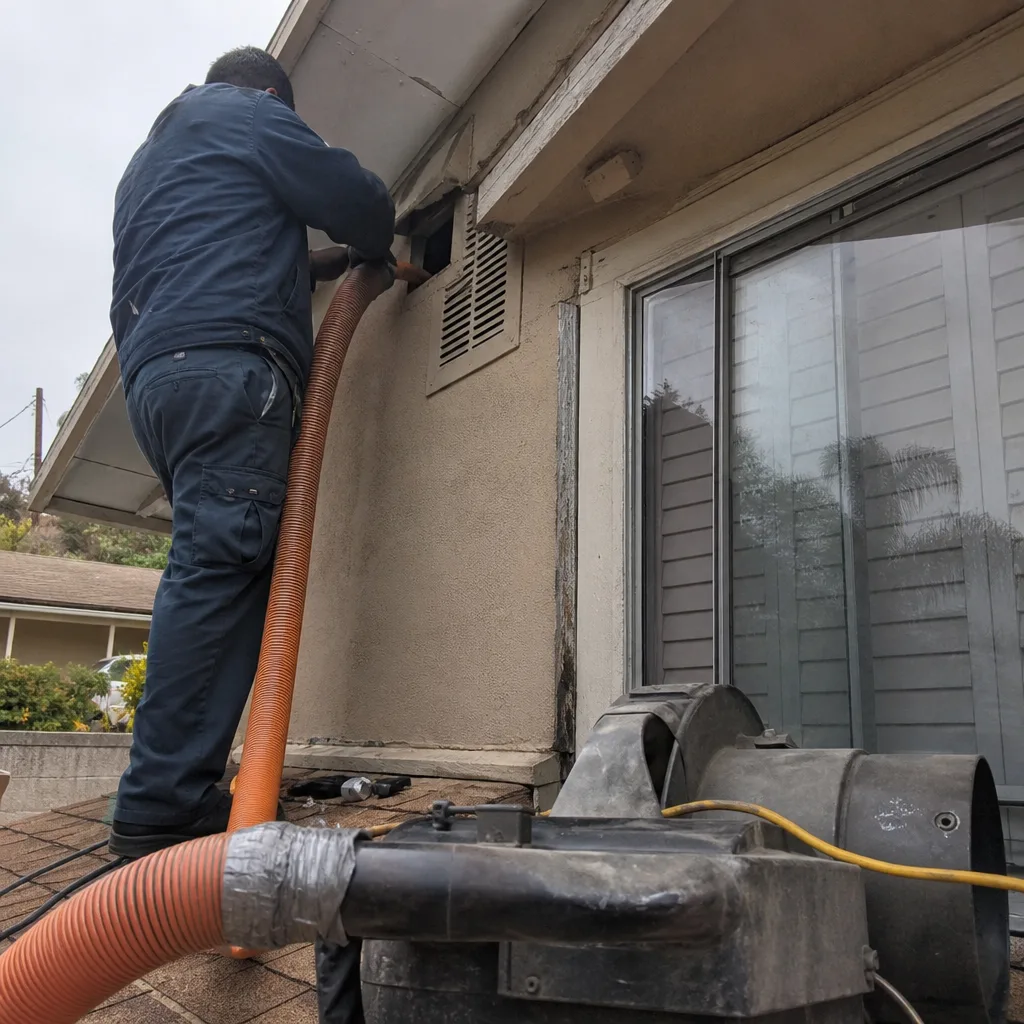 Before
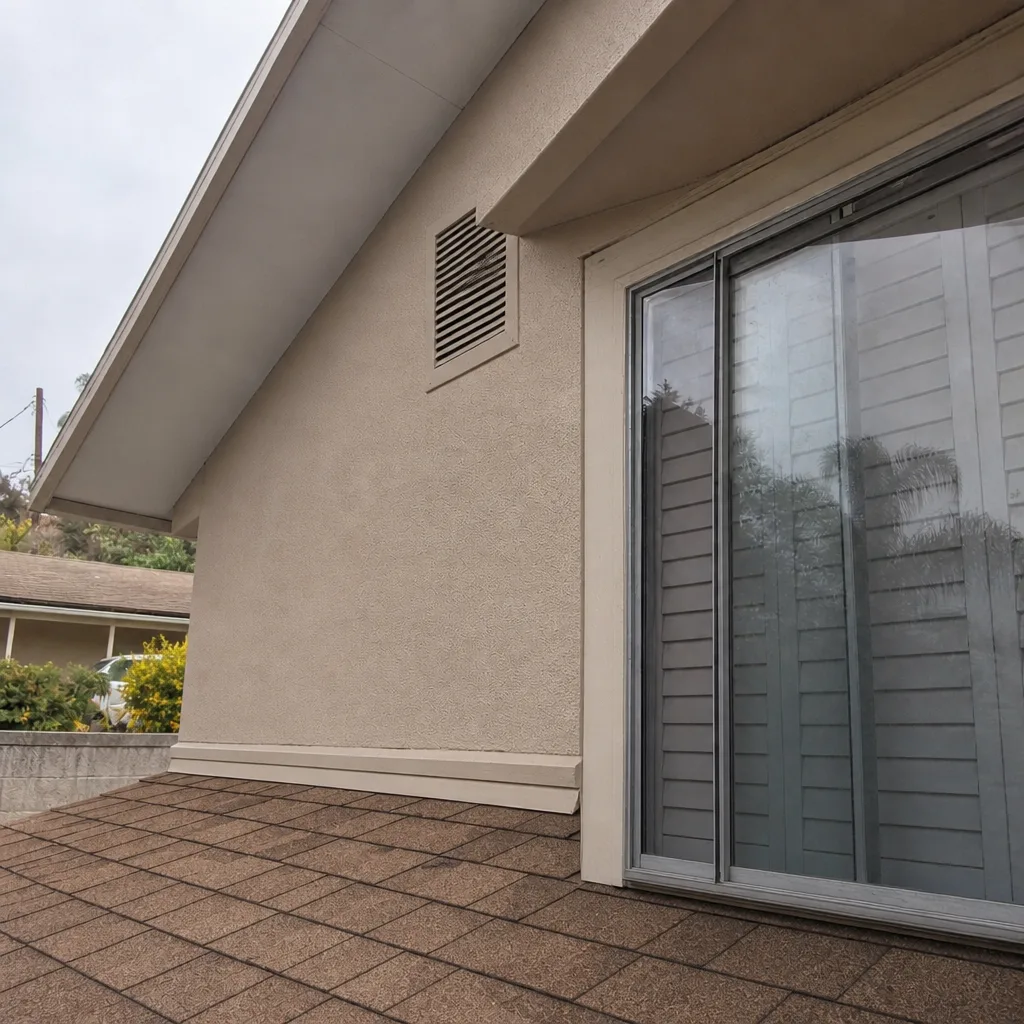 After
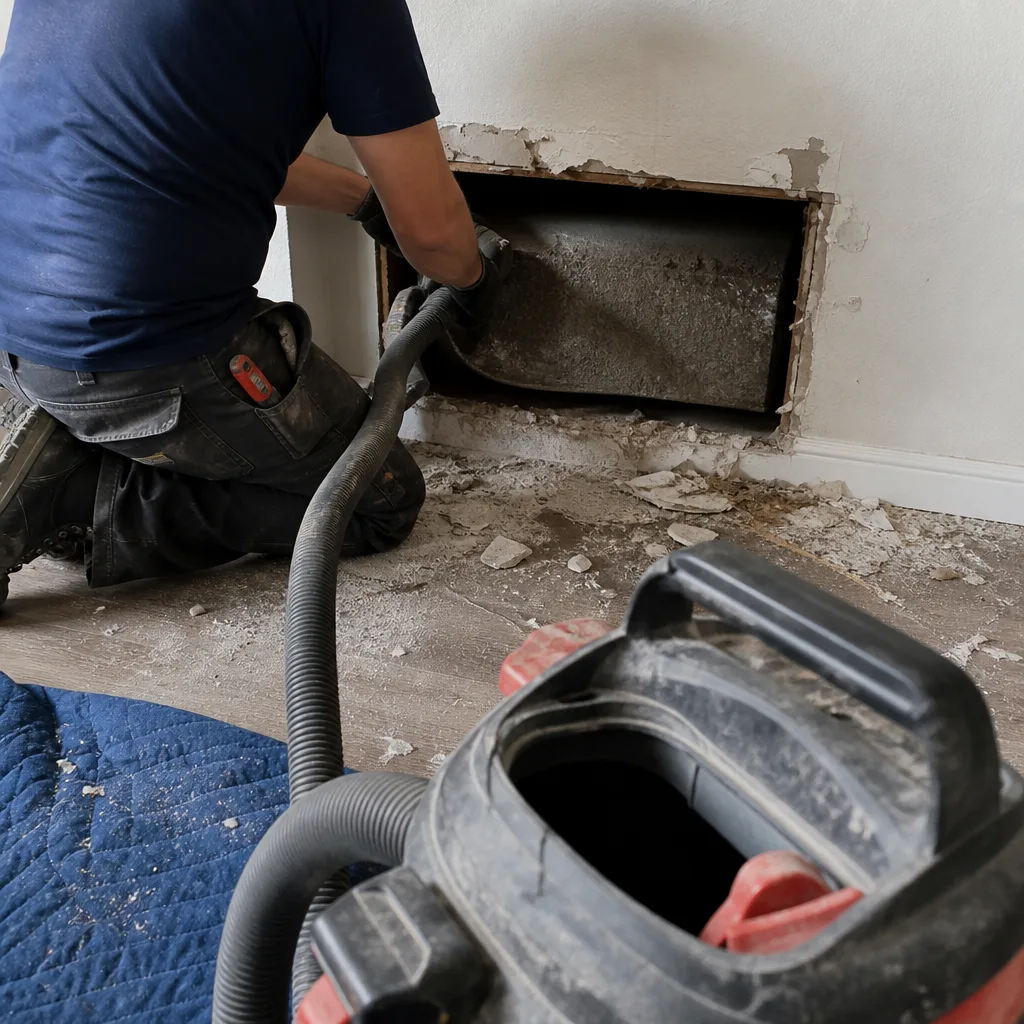 Before
 After
 Before
 After
When to Call a Professional
Some signs mean a cleaning is due on your own schedule. Others mean stop and call now.
Call a professional if you see visible dust streaking out of the registers when the system kicks on, if the household has been noticing more allergy or asthma symptoms indoors than outdoors, if there’s a musty smell coming from the supply vents, or if you’ve recently finished a renovation that put drywall dust through the system. Call sooner if there’s visible mold at a register or a duct joint, if the dryer takes two cycles to dry a load, or if you can see disconnected or damaged duct sections in the attic or crawlspace.
San Juan Capistrano Air Duct Cleaning Pros offers free estimates in San Juan Capistrano. Call (844) 443-3974. We answer 24/7. Fast dispatch from 7am to 7pm, Sunday through Friday, and we’re closed on Saturday; a call that comes in outside dispatch hours is booked into the next opening, Sunday through Friday, 7am to 7pm. The estimate is free and the price is set per job by the written estimate. Our technicians have up to 15 years of experience, and the local pro who performs the work is licensed and insured as their state requires.
Frequently Asked Questions
Typical whole-system air duct cleaning in San Juan Capistrano runs about $350 to $650, with the written estimate setting the final price for your specific system. That range covers the whole system, not a per-vent rate. Additional services like HVAC cleaning, duct repair and sealing, or air quality and sanitizing are quoted separately, per job. Call (844) 443-3974 for a free estimate.
Cheap quotes are cheaper because less work is done. Cheaper jobs typically skip the negative air containment, skip the rotary brush, clean only accessible registers, and provide no before-and-after documentation. You end up with the contamination you started with and a receipt. Call (844) 443-3974 for a free estimate and compare the process, not just the price.
You know because the report shows it: photos of each duct run before and after, close-ups of the joints where the debris was concentrated, and a written summary of the equipment used and any repairs made. Ask for the documentation before you sign off, and don’t pay for work you can’t see. Call (844) 443-3974 for a free estimate.
Most homes don’t need it on a fixed schedule. Every few years is a reasonable starting point if the home has pets, allergies in the household, or ongoing renovations. The marine layer humidity in San Juan Capistrano pushes the answer toward the shorter end for homes with older flex duct or unsealed joints. The best answer comes from a survey of your specific system. Call (844) 443-3974 for a free estimate.
It can, especially in flex duct joints that have lost their seal and in older duct systems where insulation has degraded. Coastal humidity swings don’t cause mold by themselves, but they give any accumulated organic debris enough moisture to support microbial growth. Cleaning plus sealing the joints is the fix. If you suspect mold, ask for the air quality and sanitizing service alongside the cleaning.
Yes, and galvanized sheet metal cleans very well with the right protocol. The brush head and vacuum setup have to be matched to the metal rather than to flex, and any dead legs or gaps from past renovations should be documented and sealed as part of the work. That’s exactly the combination we handle for homes near the historic district and along the older streets of San Juan Capistrano. Call (844) 443-3974 for a free estimate.
The Bottom Line
Air duct cleaning in San Juan Capistrano isn’t the same job it is in a hard-winter climate. Marine layer humidity, older housing stock with galvanized or aging flex duct, and frequent renovations all shape what’s happening inside a duct system here. Real cleaning means source removal with commercial-grade equipment: Rotobrush rotary brushes, Nikro machinery, and Abatement Technologies negative air to keep the process contained. It means reading the inspection report, insisting on photographic documentation, and treating duct repair and sealing as part of the fix, not a separate sale. It means pricing per system, in writing, before the work begins. We’ve seen how differently a sealed and cleaned system performs in this climate. If you want a straight answer about your own ducts, call (844) 443-3974 for a free estimate. We answer 24/7. Fast dispatch from 7am to 7pm, Sunday through Friday, and closed Saturday.
Written by the team at San Juan Capistrano Air Duct Cleaning Pros.