
Last updated November 24, 2026
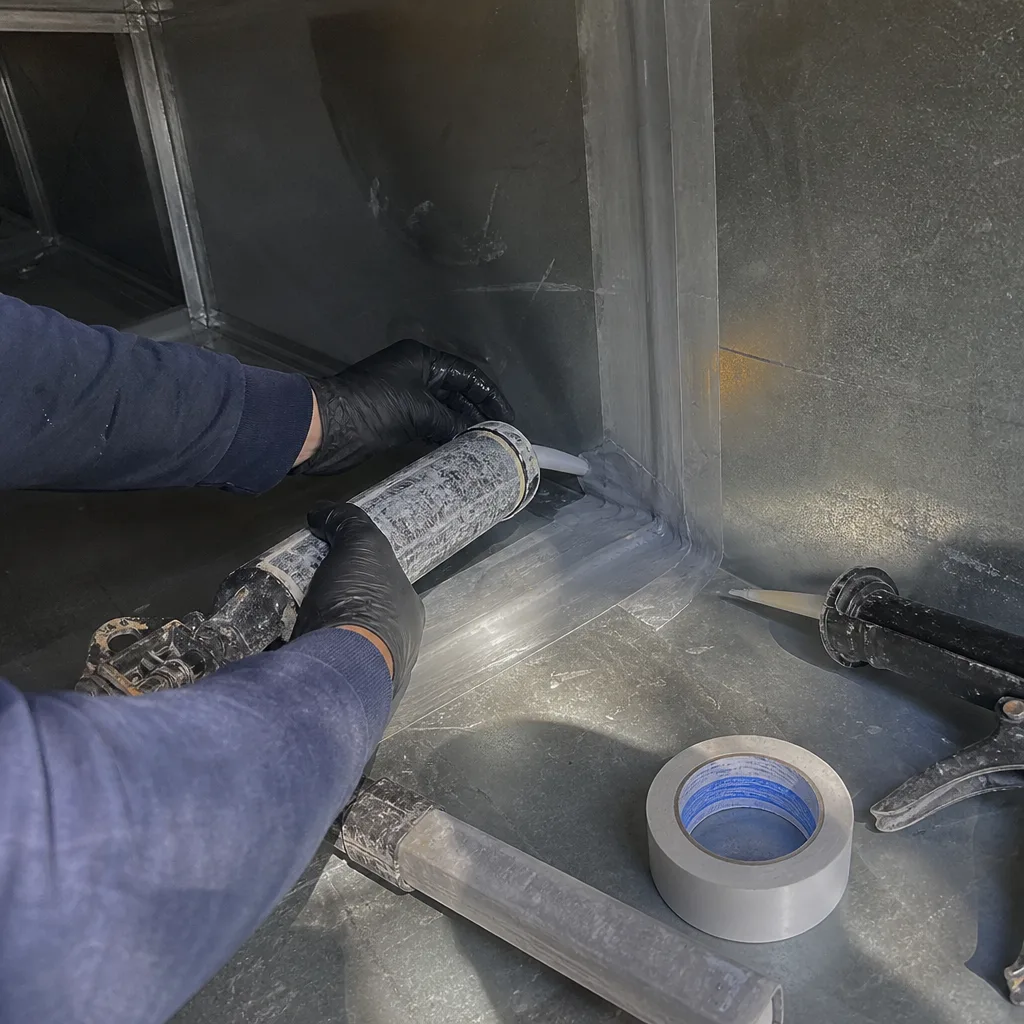
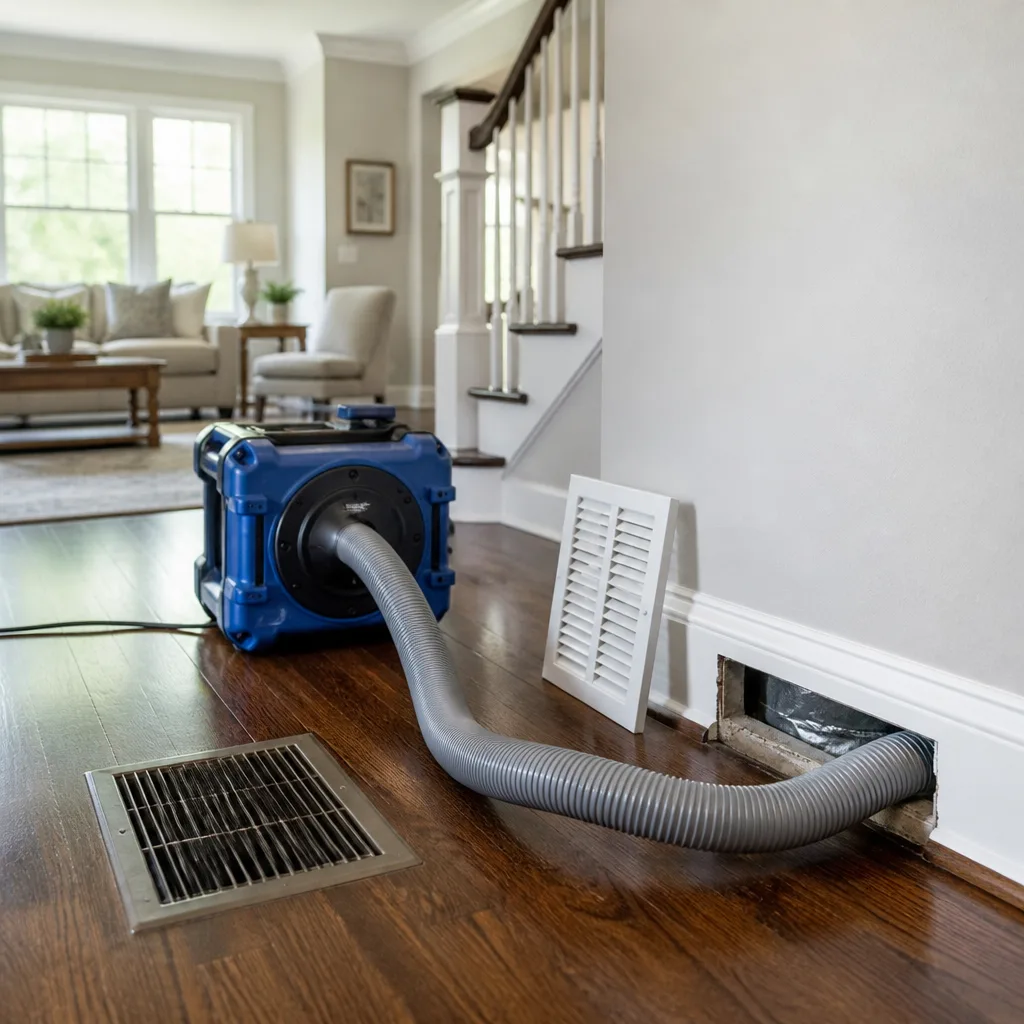 Whole-home duct cleaning
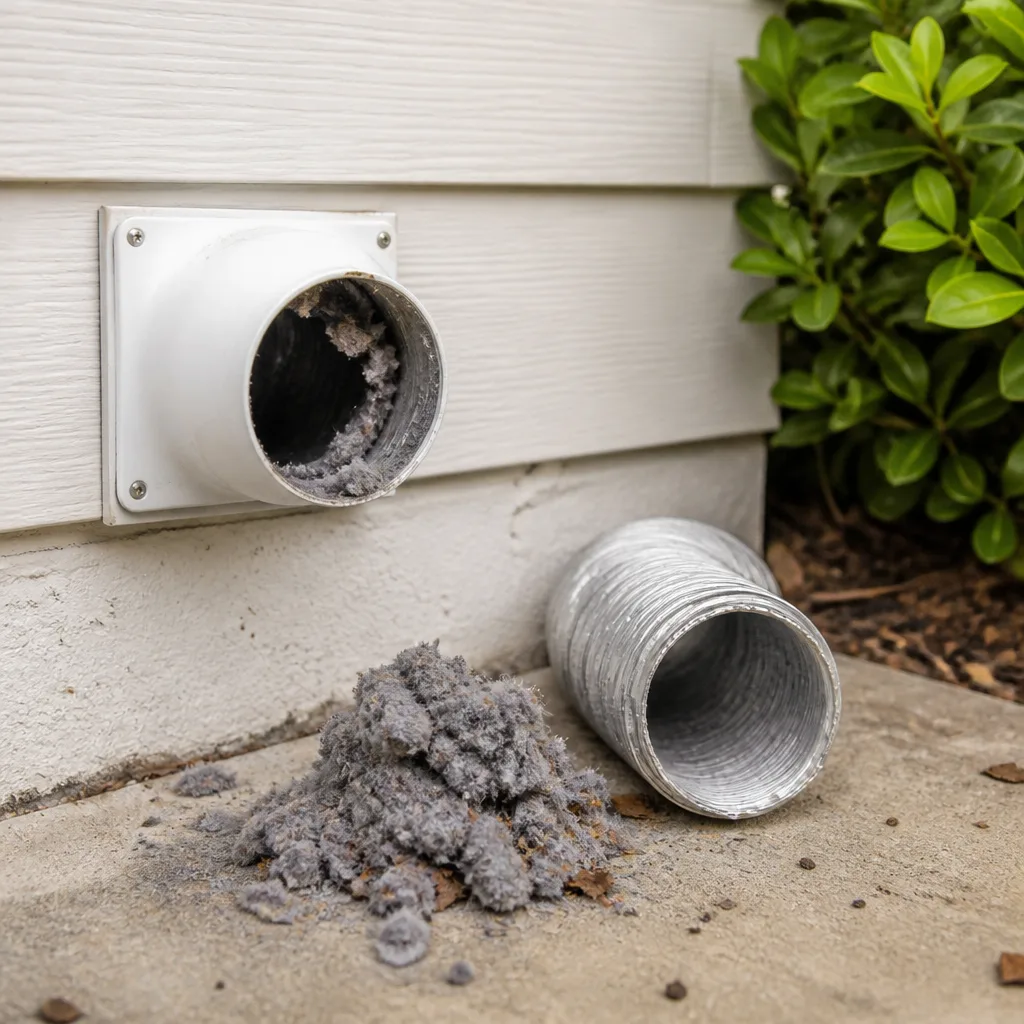 Dryer vent cleaning
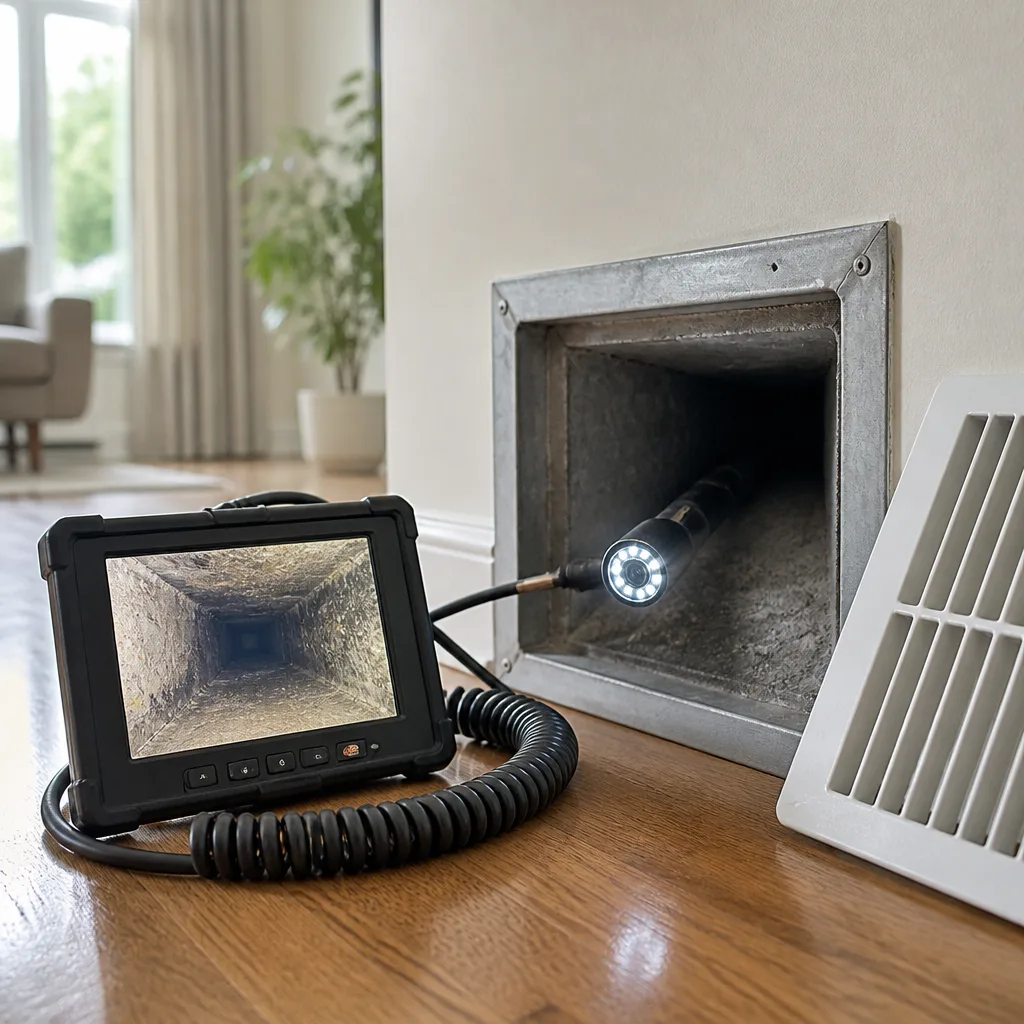 Camera inspection
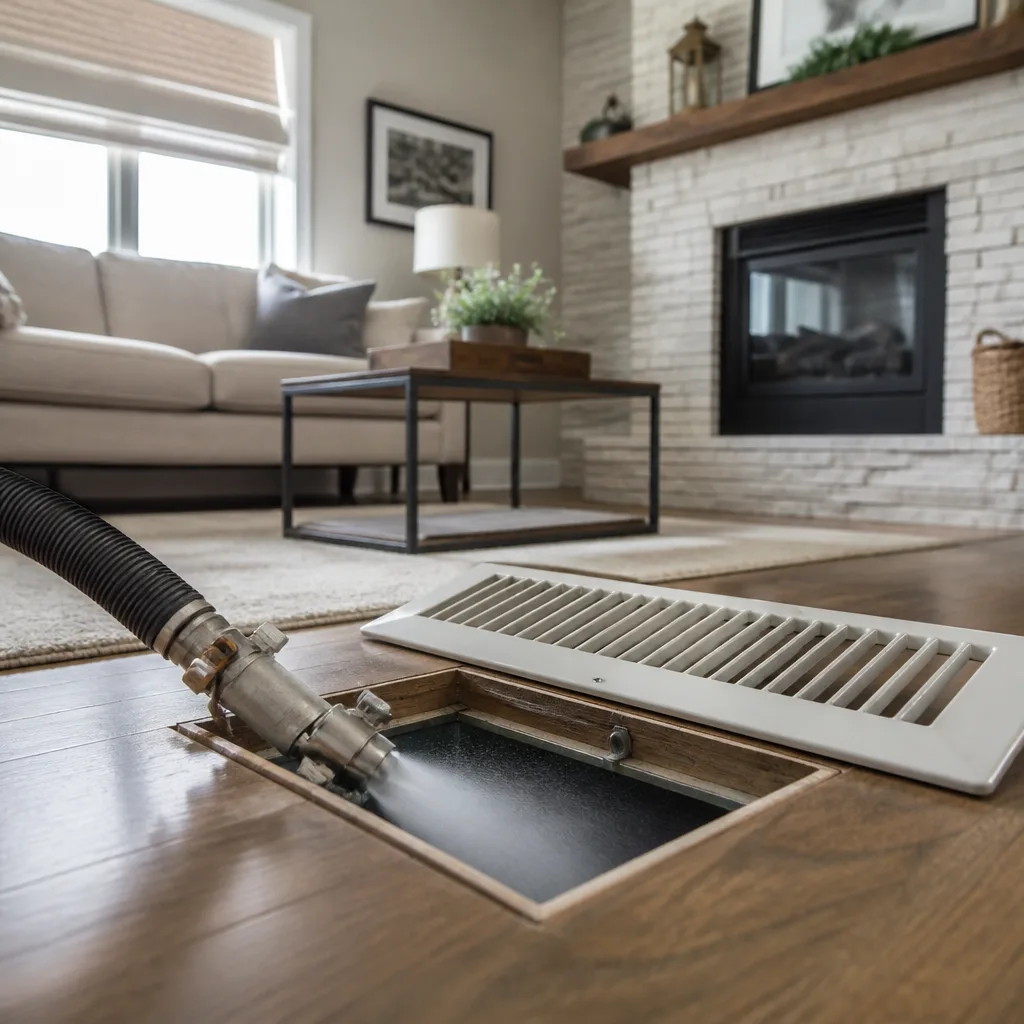 Sanitizing & deodorizing
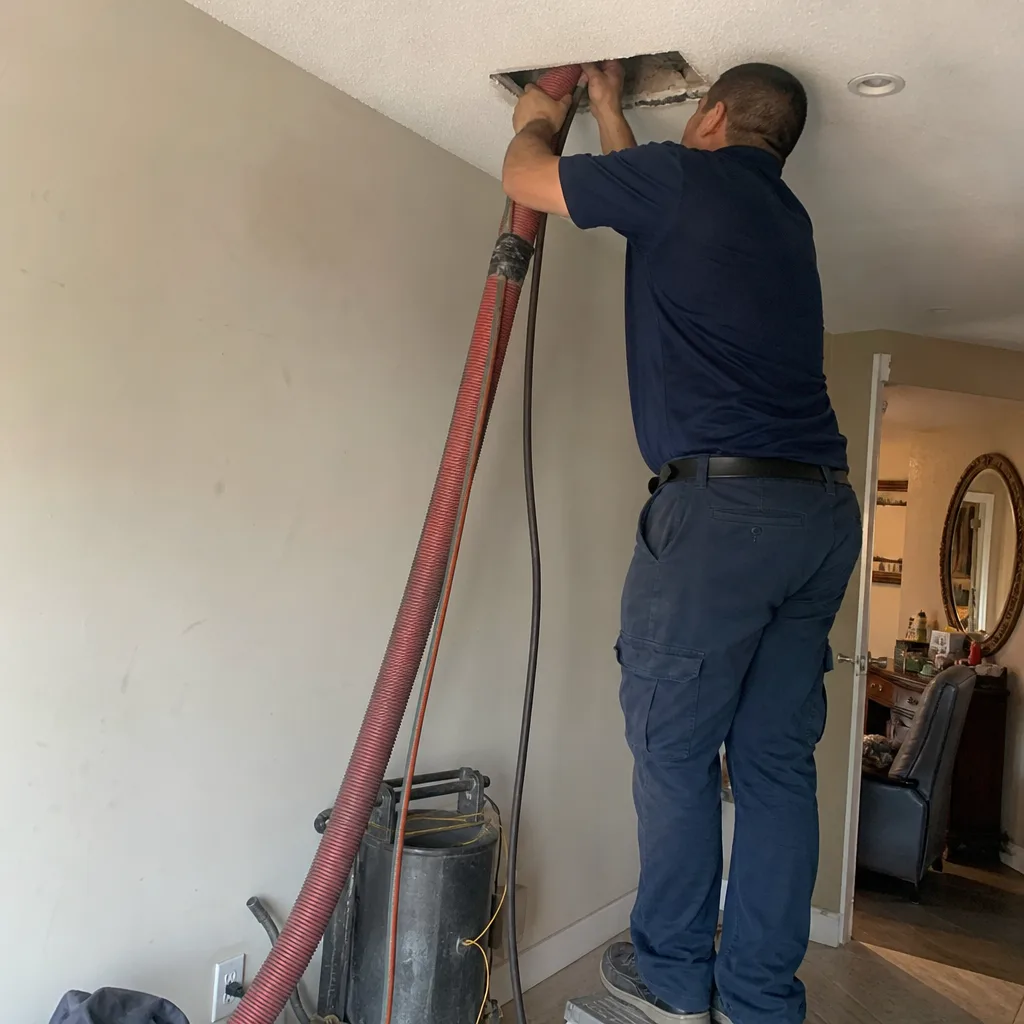
Whole-system duct and dryer vent check with before-and-after photos - you see exactly what came out of your vents
That "$99 whole-house special" is a bait ad - the real number appears once they are in your hallway, or the "clean" is a shop-vac at the register. We photograph the inside of your ducts before and after instead.
Air Duct Cleaning Permits, Codes & Inspections in San Juan Capistrano, CA: What You Need to Know
Cleaning your ducts is maintenance. Changing your ducts is construction. That one distinction drives almost every permit question we hear in San Juan Capistrano, and most homeowners only learn it after a technician is already on a ladder suggesting “a quick fix while we’re in here.” Cleaning removes debris and requires no permit. Sealing a disconnected trunk line, cutting in a new register, swapping a flex run, or coating the inside of a duct with a chemical sealant can move the job into territory that a licensed C-20 contractor and, in some cases, the City of San Juan Capistrano’s building department need to be involved in. This guide walks through where that line sits, what California code actually says, and what records to keep.
Quick Answer
Standalone air duct cleaning does not require a permit in California. Mechanical permits become a factor when ductwork is modified, added, replaced, or when chemical treatments are applied inside the system – and that work generally needs a C-20 HVAC contractor. In San Juan Capistrano, the building department applies the California Mechanical Code with local amendments, so the safest path is to confirm scope in writing before any modification starts.
Styles & brands we work with
- Whole-home duct cleaning
- Dryer vent cleaning
- Camera inspection
- Sanitizing & deodorizing
Table of Contents
- Cleaning vs. Modification: Where the Permit Line Sits
- What the California Mechanical Code Says About Duct Work
- San Juan Capistrano Local Amendments and Building Department Expectations
- C-20 HVAC License vs. Unlicensed Duct Cleaning
- Chemical Treatments, Sealants, and FIFRA Rules
- What an Inspection Actually Checks
- Documentation Homeowners Should Keep
Cleaning vs. Modification: Where the Permit Line Sits
The line between cleaning and modification is usually obvious once you name it. Cleaning is anything that removes material from inside the existing system without changing its shape, size, or configuration. Modification is anything that alters the system. Here’s how that break down in practice:
Cleaning (no permit):
- Mechanical agitation of duct walls with a rotary brush system, followed by negative-pressure extraction
- Removal of dust, debris, and light buildup from supply and return runs
- Cleaning of the air handler cabinet, blower, and evaporator coil surfaces as part of HVAC cleaning
- Sanitizing fog applied to interior duct surfaces (subject to product registration – covered later)
Modification (permit likely required):
- Replacing a section of flex or rigid duct
- Adding, relocating, or removing a supply or return register
- Sealing a disconnected or crushed trunk line by cutting into the system
- Resizing trunk lines or altering the balance of the system
- Installing new duct runs as part of an HVAC changeout
In our experience across San Juan Capistrano homes, the confusion usually comes up when a technician finds a crushed flex run behind a wall cavity in a hillside property near Los Rios or a detached casita off Del Obispo. The cleaning is fine and unpermitted. The moment that crushed run needs to be cut out and replaced, you’re in modification territory, and it should be a separate conversation with a licensed contractor before anyone touches a utility knife.
What the California Mechanical Code Says About Duct Work
The California Mechanical Code (CMC), published by the International Association of Plumbing and Mechanical Officials and adopted statewide with amendments, governs how duct systems must be installed, sealed, supported, and tested. It does not require a permit to clean a duct system that’s already in place. It does govern any alteration to that system.
The relevant principle is straightforward: if the work changes the design or integrity of the mechanical system, it must comply with the CMC’s duct construction and sealing standards, and the local building department has authority over the permit. That includes things like:
- Duct sealing standards. Joints, seams, and connections in the sections being modified must meet the sealing requirements in the CMC.
- Support and clearance. New or replaced sections must be supported and clearanced according to code, which matters in older San Juan Capistrano homes where attic routes can be tight.
- Combustion air. Any change that affects return air can affect combustion appliance performance. That’s a safety check, not a formality.
- Testing. Some jurisdictions require duct leakage testing on certain alterations, particularly on new construction and major remodels.
We don’t issue permits and we don’t perform permitted modification work. What we do is clean, and when a cleaning reveals a broken or separated duct, we document it and recommend the homeowner confirm scope, licensing, and permit requirements with the local building department before authorizing repair. That’s San Juan Capistrano air duct cleaning pros work: cleaning done properly, repair recommendations made honestly.
San Juan Capistrano Local Amendments and Building Department Expectations
San Juan Capistrano has a strong preservation instinct. That shapes how mechanical work is reviewed in a city with historic properties downtown and a mix of tract homes, hillside custom builds, and agricultural parcels spreading out toward Ortega Highway and the Capistrano Valley floor.
Local amendments to the California Mechanical Code are published with each code cycle, and they can tighten requirements around things like equipment screening, vent termination, and duct routing on properties near historic districts or in the hills. The practical takeaways for homeowners:
- Call the building department before a scope changes. A five-minute question about whether a duct repair needs a mechanical permit is cheaper than finding out afterward.
- Ask about historic overlay. If your home sits in or near the historic downtown footprint, exterior mechanical changes can trigger additional review.
- Confirm the current code cycle. California updates its mechanical code on a regular cycle; ask which edition is in force when you call.
- Keep paperwork address-specific. Permits and inspections are tied to a parcel, not to a homeowner, so the record follows the house.
We don’t speak for the City of San Juan Capistrano and we don’t give out permit rulings. What we can say from doing this work locally is that inspections in San Juan Capistrano tend to be thorough, and that scopes submitted with clear duct diagrams and product information move through review more efficiently than vague descriptions.
C-20 HVAC License vs. Unlicensed Duct Cleaning
This is where most homeowner confusion starts. A C-20 Warm-Air Heating, Ventilating, and Air-Conditioning contractor license issued by the California Contractors State License Board is the credential that authorizes someone to install, alter, and repair HVAC and duct systems. A duct cleaner performing cleaning services is not doing C-20 work.
The practical picture:
- What a C-20 contractor can do: install, alter, repair, and service HVAC and duct systems; pull mechanical permits; supervise permitted work.
- What an unlicensed duct cleaner can legally do: cleaning services only. No alterations. No repair work. No running new duct. No modification of the mechanical system.
- What a licensed contractor doing cleaning gets you: a company that can handle the repair if something is found, or that can clearly hand it off to the right trade.
When you ask a company about duct modification work, ask three questions: are you licensed, what classification, and can you pull the permit. If the answer to any of them is fuzzy, don’t authorize the scope. The California Contractors State License Board maintains a public lookup for license classification and standing at cslb.ca.gov, and it takes about a minute.
For cleaning-only work, we recommend looking for a company that uses professional-grade equipment rather than a shop vac. Our technicians use Rotobrush rotary brush systems for mechanical agitation and Nikro extraction equipment for pulling debris out of the system. That’s the difference between cleaning that resets the ductwork and a superficial pass that stirs dust back into the airstream.
Chemical Treatments, Sealants, and FIFRA Rules
Any product applied inside a duct system that’s claimed to kill microorganisms, reduce microbial growth, or control allergens is a pesticide under the Federal Insecticide, Fungicide, and Rodenticide Act (FIFRA). That means it must be registered with the EPA for that use, and it must be used according to its label.
What that means for a homeowner considering “sanitizing” as part of a duct cleaning:
- Ask for the product name and EPA registration number. A legitimate product has one. A contractor using an unregistered product is out of compliance.
- Ask to see the label directions for duct use. The label is the law under FIFRA. If the label doesn’t cover duct interiors, the product isn’t approved for duct interiors.
- Ask about ventilation and reoccupancy. Any label will have directions for airflow and how long to wait before use of the space.
- Ask whether the product is an encapsulant, a biocide, or both. Sealants and antimicrobial products are regulated differently, and encapsulants that coat duct interiors are also a mechanical modification in many jurisdictions.
Our air quality and sanitizing service uses EPA-registered products applied according to their labels, and we walk homeowners through what’s being applied before it goes into the system. Chemical treatment is not a substitute for physically cleaning the duct walls, which is why agitation and extraction come first.
What an Inspection Actually Checks
If your project does require a permit, here’s what the inspector is typically looking at, based on how duct modification inspections run in Orange County:
- Scope match. Does the work on the ground match the scope on the permit? Extra modifications discovered during inspection need to be added.
- Duct sealing and connections. Joints, seams, and connections at the altered sections are checked for the sealant and mastic required by the CMC.
- Support and clearance. Strapping or support of new runs and clearance from combustibles or heat sources.
- Register and grille installation. Any new or relocated supply or return is checked for correct installation and airflow balance.
- Combustion air and appliance venting. If return air is altered, the inspector may verify that combustion appliances still perform correctly.
- Documentation. Product data, sometimes leakage test results, and the permit card itself.
What an inspection does not cover: whether the ducts are clean. That’s a separate service, and it’s not a code issue. If you want to document the condition of your ducts before or after a permitted project, ask a duct cleaning company for before-and-after photos of your own system – not stock photos from a brochure.
Documentation Homeowners Should Keep
The paper trail matters more than most homeowners expect. If you sell your San Juan Capistrano property, refinance, or file an insurance claim related to air quality or water intrusion into HVAC systems, having duct documentation helps. Keep this file:
- Pre-cleaning photos and video of the duct interiors – our cleaning service provides before-and-after photos of the system we worked on
- The cleaning invoice with a description of what was cleaned and which equipment was used
- Any product labels for sanitizing or encapsulant treatments, including the EPA registration number
- The permit and final inspection card if any duct modification was performed
- The contractor’s license number for any modification work, along with the signed contract and scope of work
- Photos of the finished work showing sealed and supported duct sections
- Filter replacement and HVAC service records to establish an ongoing maintenance history
We hand over before-and-after photos on every cleaning because “trust me, it’s cleaner” isn’t documentation. If you’re preparing to sell a home in San Juan Capistrano, that saved file is often the difference between a smooth transaction and a buyer’s inspector flagging the system as undocumented.
Common Mistakes to Avoid
- Assuming all “sealing” is cleaning. Some companies describe duct sealing as part of cleaning when the work actually cuts into the system. Ask specifically whether the work changes the shape or configuration of the ducts.
- Not asking for the license. If a technician is using a knife, drill, or sealant, they should be working under a C-20 license, and the permit should be pulled if required.
- Accepting a verbal scope. In a city with a historic downtown like San Juan Capistrano, memory of what was authorized tends to fade. Get the scope in writing and keep it with the invoice.
- Skipping the EPA registration number. A product applied inside a duct without a valid FIFRA registration for that use is a compliance problem, and you’re the one breathing the air.
- Not calling the building department. It’s a free phone call and it settles permit scope definitively. Speculation from a contractor is not a ruling.
- Choosing the cheapest quote. A low number with no scope, no documented equipment, and no photos is not a bargain. It’s a mystery. We describe our work in terms of what’s actually done: Rotobrush agitation, Nikro extraction, and a documented before-and-after.
- Ignoring the dryer vent during the same visit. In our experience, exhaust vents get skipped because the ductwork gets all the attention. A clogged dryer vent is a fire hazard and should be handled separately as dryer vent cleaning – that work has its own code and inspection standards, and it belongs on the maintenance list too.
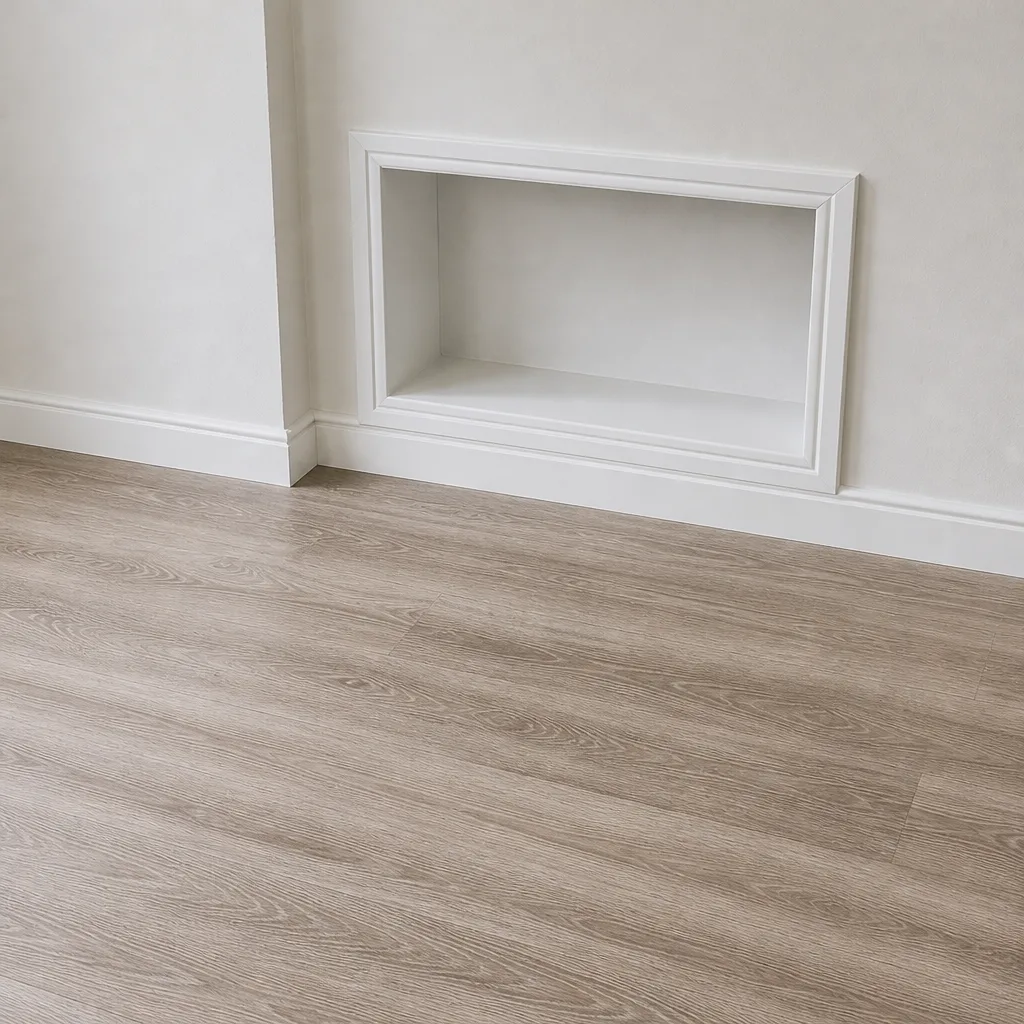
See the difference
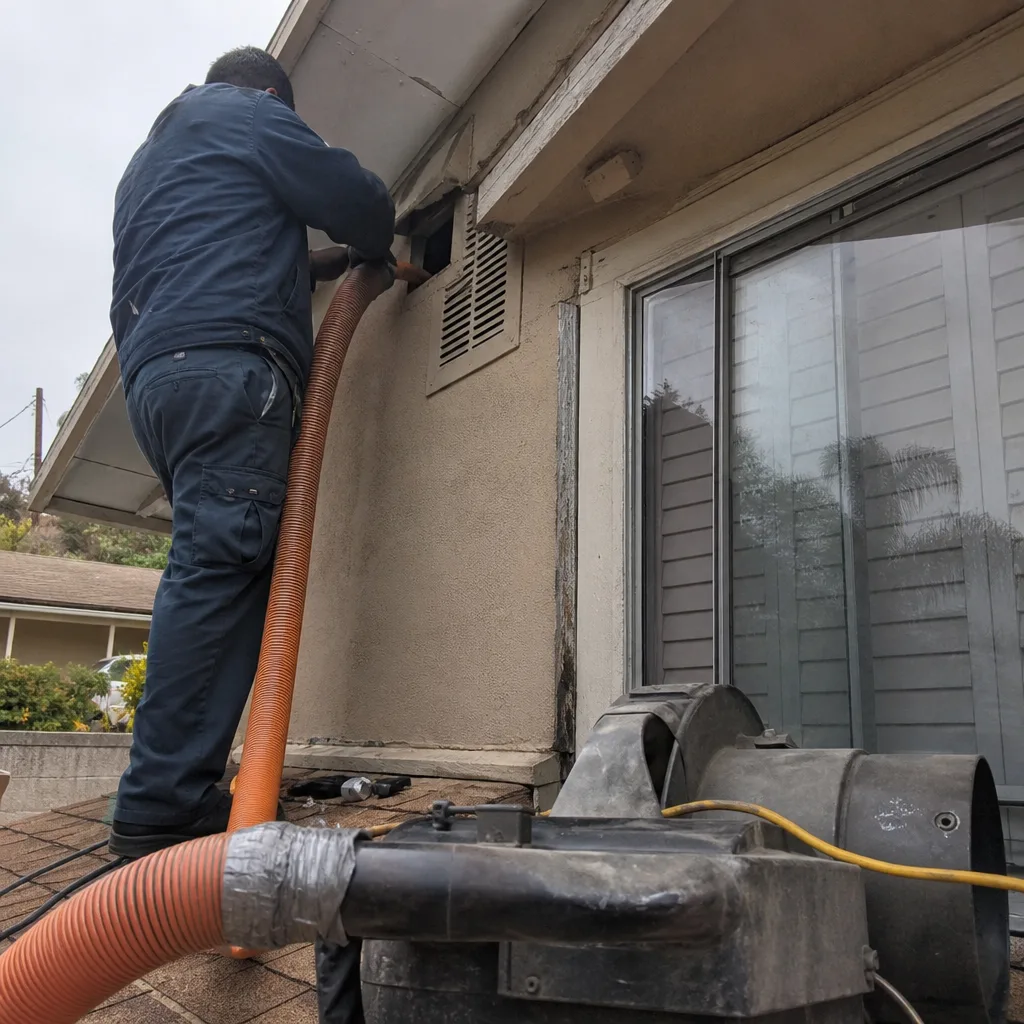 Before
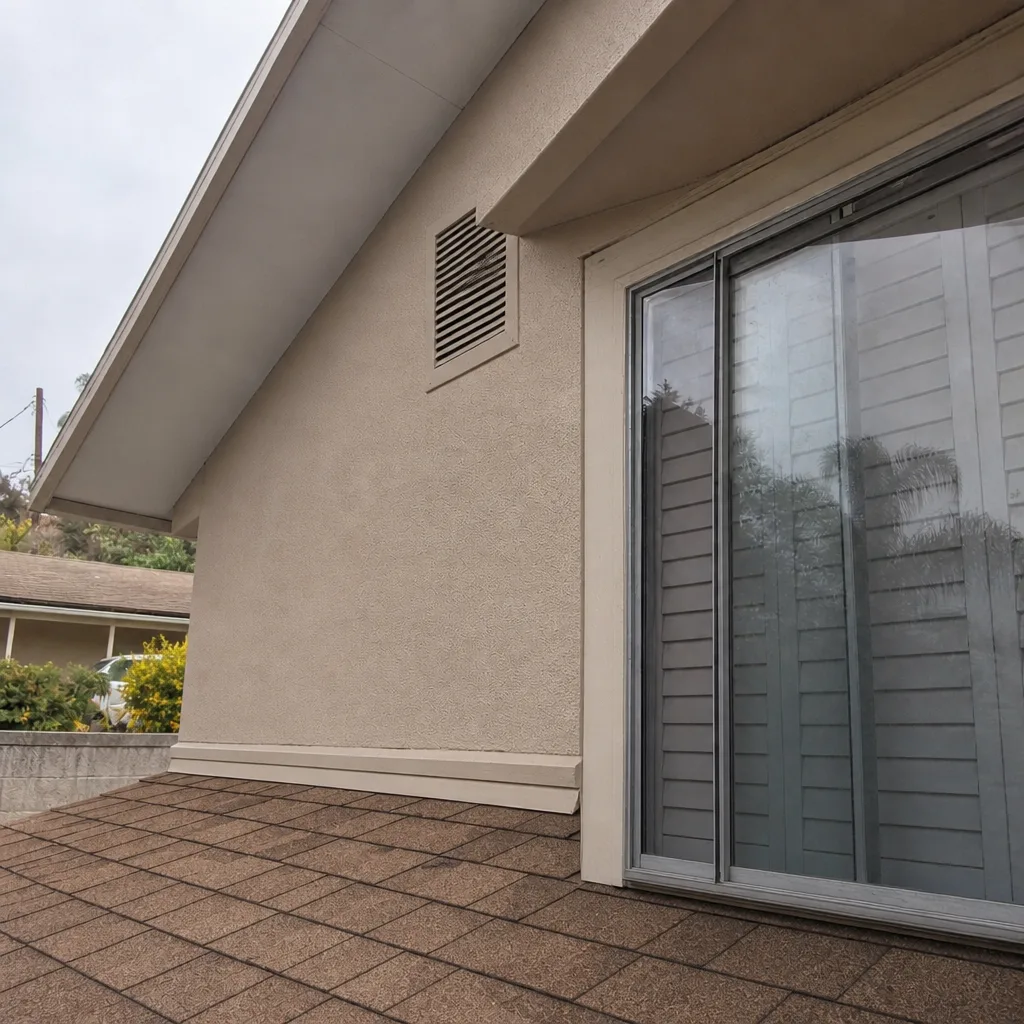 After
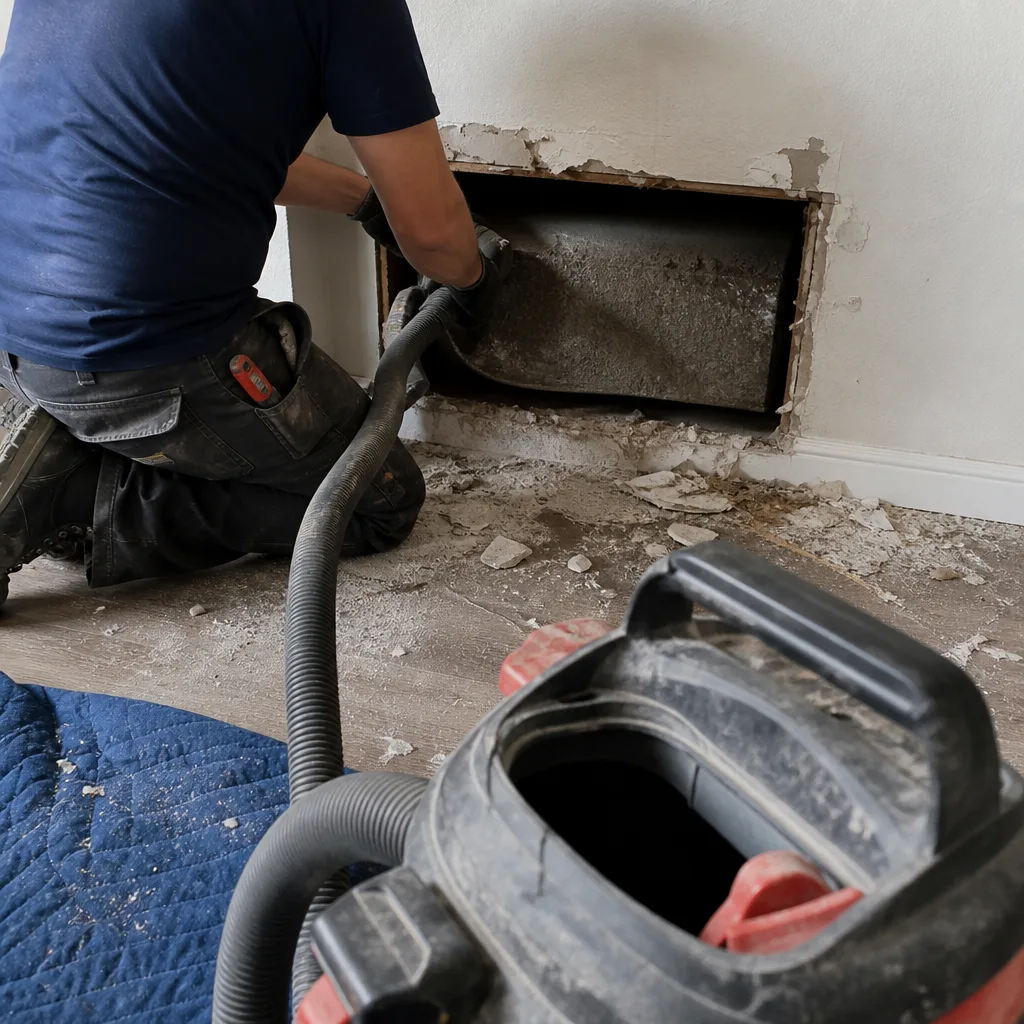 Before
 After
 Before
 After
When to Call a Professional
A few situations shouldn’t wait. If you’re hearing air escaping into an attic or crawlspace, seeing dust streaks around the registers, or the airflow in one room has dropped noticeably, that’s a sign of a disconnected or crushed duct, and it’s not something to diagnose over the phone. Visible mold growth inside the airstream, a recent water event that saturated the air handler, or persistent allergy and asthma symptoms indoors all point to a system that needs professional eyes on it. Our technicians have up to 15 years of experience with Rotobrush and Nikro equipment and can document what they find, including the cases where the right answer is a referral to a licensed contractor for repair. San Juan Capistrano Air Duct Cleaning Pros offers free estimates in San Juan Capistrano – call (844) 443-3974. We answer 24/7. Fast dispatch from 7am to 7pm, Sunday through Friday.
Frequently Asked Questions
No. Cleaning existing ductwork does not require a permit in San Juan Capistrano or anywhere in California. A permit only becomes a factor if the work modifies the system – replacing duct sections, adding or moving registers, or sealing disconnected lines by cutting into the ductwork. If the technician finds a repair need during cleaning, call the City of San Juan Capistrano building department before authorizing the additional work.
Cleaning removes debris from an existing system without changing its shape or configuration. Modification changes the system – new duct runs, replaced sections, or relocated registers – and must comply with the California Mechanical Code’s construction and sealing standards. The CMC doesn’t require a permit to clean; it governs how the system is built and altered. Call (844) 443-3974 for an exact quote – estimates are free.
Only for modification and repair work. Cleaning is not licensed C-20 work, so a company performing cleaning alone doesn’t need that classification. The moment a company replaces a flex run, adds a register, or seals a disconnected trunk by cutting into the system, they should be operating under a C-20 Warm-Air Heating, Ventilating, and Air-Conditioning contractor license. You can check license classification and standing at cslb.ca.gov. Call us first if you’re unsure whether a scope includes modification.
Yes. Any product applied inside a duct that claims to control microorganisms or microbial growth is a pesticide under FIFRA, and it must be EPA-registered for that specific use. Ask for the product name and EPA registration number before authorizing the treatment. We use EPA-registered products and follow label directions for application and reoccupancy. Call (844) 443-3974 with questions about what’s being applied – estimates are free.
There’s no rigid schedule. Most homes benefit from cleaning every few years, and some can go longer. Homes near heavy landscaping or active construction drag more in, and homes with pets or allergy-sensitive occupants usually want to revisit more often. A more reliable trigger is condition, not the calendar: a visible dust streak at registers, mold growth, or a recent water event means it’s time, regardless of how many years have passed.
The most common reason is unscoped work. A low number is often for a superficial pass with consumer equipment and no documentation, and then an upsell arrives once the technician is inside. Ask what equipment will be used, whether agitation and extraction are both included, and what photos and records you’ll get. Our quotes are one flat price per system agreed before work starts, no per-vent pricing, and before-and-after photos of your own ducts. Call (844) 443-3974 for an exact quote.
Ask for photos of your system before and after cleaning, plus an invoice describing the scope. A company that can’t produce those didn’t document the work. Compare the airflow and dust levels after the visit against what you noticed before, and keep the file. Call us if you want to see what a documented cleaning looks like on your system – estimates are free.
The Bottom Line
Cleaning your ducts is not permit work. Modifying them is. If a technician recommends a sealant, a duct replacement, or a register change while cleaning, ask for the scope in writing, confirm the company holds a C-20 license for that work, and call the City of San Juan Capistrano building department to verify whether a mechanical permit applies. Any chemical product applied inside the system should have an EPA registration number and a label that covers duct use. Keep the paperwork – photos, invoices, product labels, and any permit card – because it follows the house. And when the work is cleaning, expect it to be done with equipment that agitates and extracts, not a shop vac. For a documented cleaning in San Juan Capistrano, call (844) 443-3974. We answer 24/7. Fast dispatch from 7am to 7pm, Sunday through Friday. Estimates are free, and our work is backed by one flat price per system agreed before we start.
Written by the team at San Juan Capistrano Air Duct Cleaning Pros.